Build Your Own Game World (Part Two)
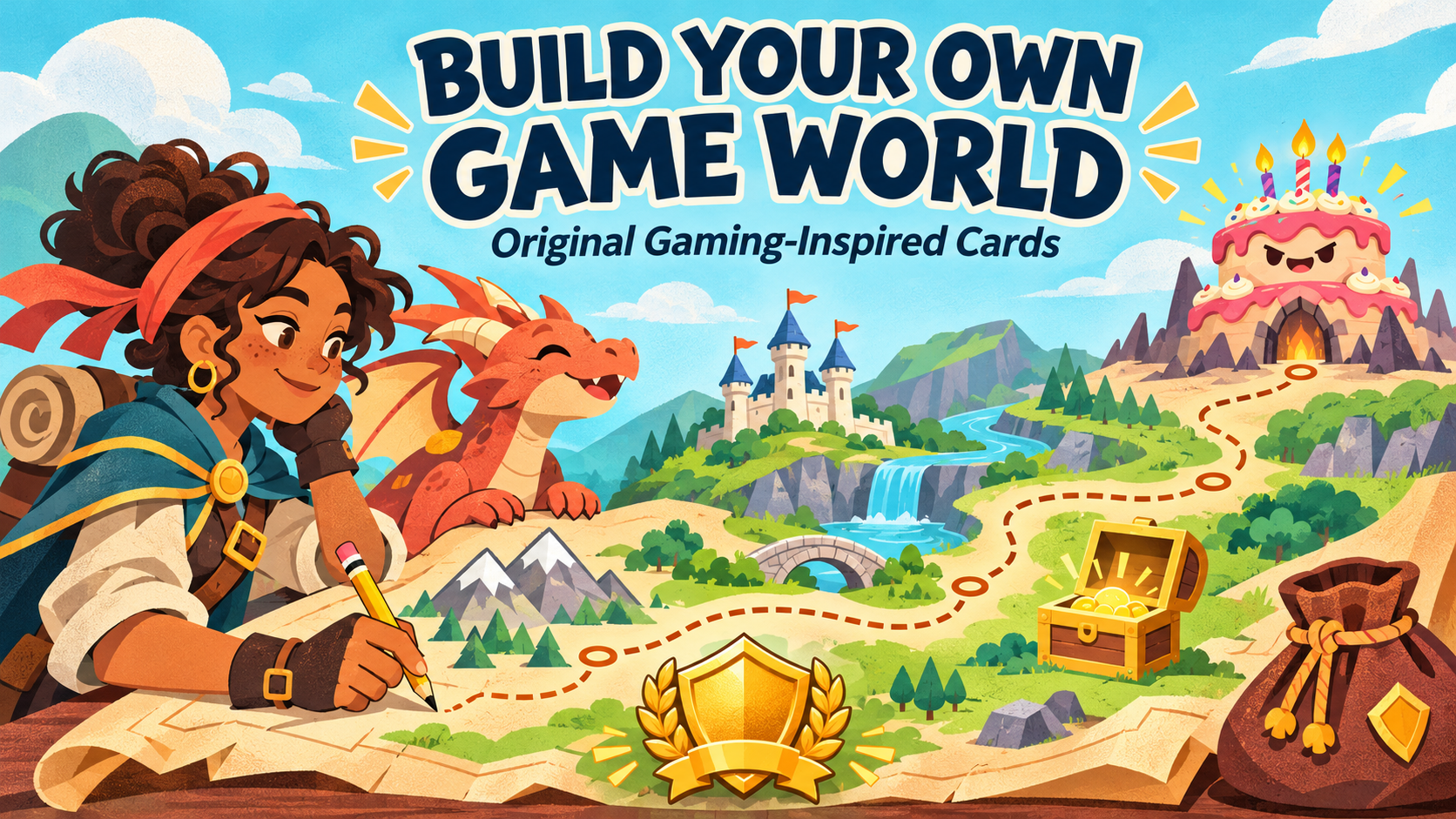
In Part One, we looked at how gaming language can inspire cards for birthdays, retirement, graduation, new jobs, relationships and many other occasions.
Now let’s look at the visual side.
Gaming gives artists a wonderful vocabulary: quests, maps, upgrades, inventories, boss battles, power-ups and cooperative play. But there’s an important difference between being inspired by gaming and borrowing from a particular game.
The safest—and most creative—approach is simple:
Use the grammar of gaming, not the identity of a famous game.
Create Your Own Player
You don’t need a recognisable game character to make a gaming-inspired card. Almost anyone can become the hero of a new adventure.
Try:
- A grandmother with a handbag full of legendary equipment
- A tired parent whose only power-up is a short nap
- A cat on a dangerous mission to reach its food bowl
- A retiree leaving the Office Fortress behind
- A gardener carrying an enchanted trowel
- A couple beginning a cooperative adventure
- A child with maximum energy and no interest in following the instructions
Give the character a personality before choosing the costume. Are they brave, grumpy, distracted, overconfident or completely unprepared?
That is usually where the humour begins.
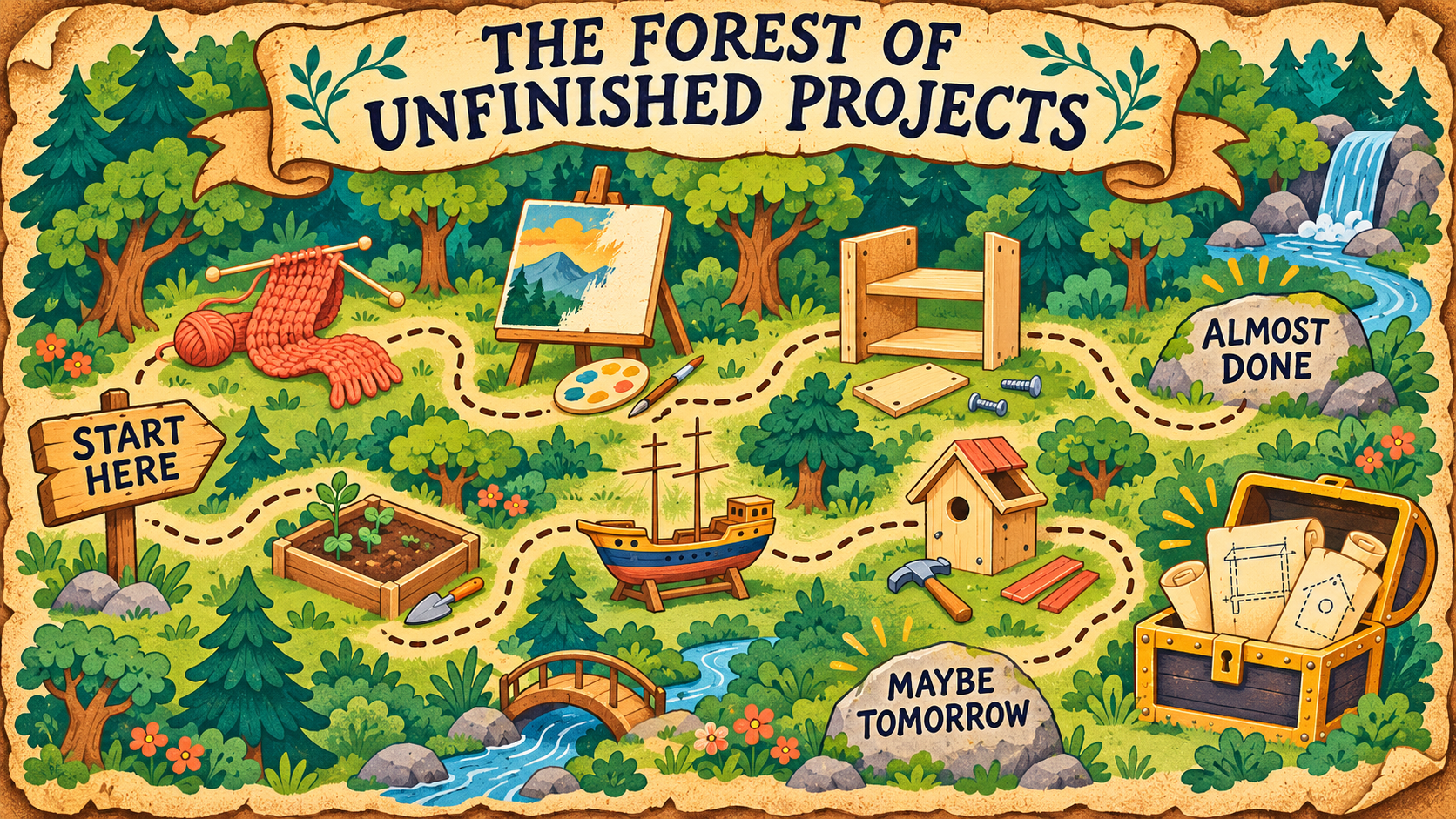
Invent a New Map
Maps are perfect for cards about moving, retirement, graduation and birthdays.
Instead of copying a familiar game landscape, invent locations based on ordinary life:
- The Valley of Forgotten Passwords
- Mount Laundry
- Cake Castle
- The Forest of Unfinished Projects
- The Plains of Questionable Decisions
- Unlimited Weekend Bay
- The Kingdom of Not My Problem
A retirement card could show someone travelling from Office Fortress through Deadline Desert towards Unlimited Weekend Bay.
A birthday card might lead through The Forest of Experience to Cake Castle.
The map only needs a few funny landmarks to suggest a much larger adventure.
Fill the Inventory
An inventory is an easy way to make a card personal.
A parent’s inventory could contain emergency snacks, spare keys, tissues and everyone else’s belongings.
A retiree’s inventory might include gardening gloves, comfortable shoes, hobby equipment and an alarm clock marked discarded.
A cat’s inventory could contain one bottle cap, half a feather and an object nobody remembers buying.
For a milestone birthday:
Front:
LEVEL 60 INVENTORY
Inside:
Six decades of memories, skills and adventures—and still plenty of room for cake.
The objects should support the joke or occasion. A small, purposeful collection is usually stronger than filling the design with random game props.
Design an Original Boss Battle
Everyday life provides plenty of potential bosses:
- The Birthday Cake Boss
- The Final Exam Boss
- The Laundry Monster
- The Deadline Dragon
- The Family Group Chat Hydra
- The Christmas Dinner Boss
- The Flat-Pack Furniture Beast
A character does not have to defeat the boss elegantly. A determined warrior facing a cake covered in candles, armed only with a fork, may be funnier than a grand heroic battle.
Front:
FINAL BOSS: BIRTHDAY CAKE
Inside:
Defeat it one slice at a time.
Happy Birthday!
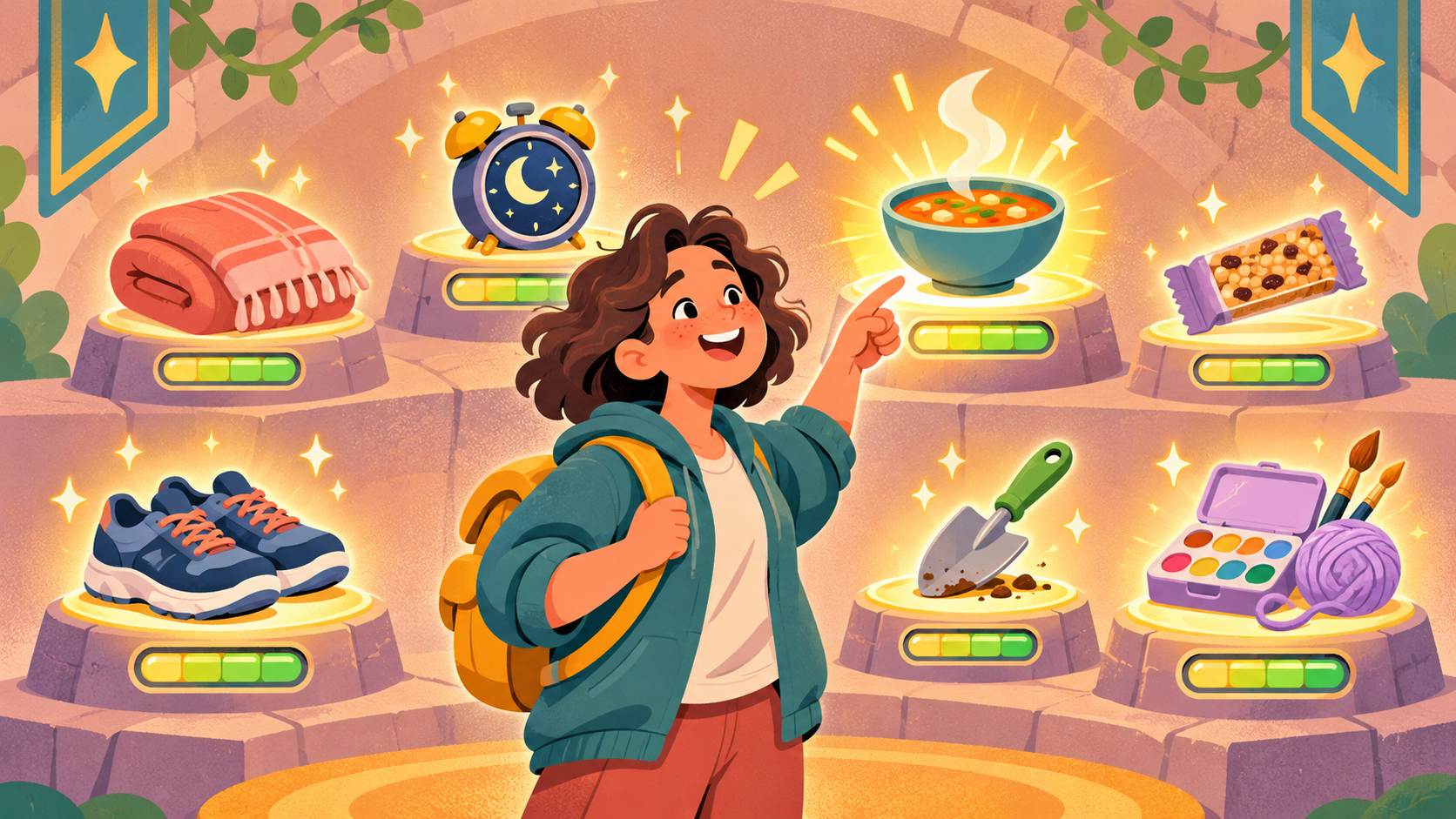
Use Power-Ups for Real Life
Power-ups can make gaming language feel personal and relatable.
For a get-well card:
- Rest
- Quiet
- Warm blankets
- Soup
- Time
For retirement:
- Unlimited weekends
- Afternoon naps
- Hobby expansion
- Alarm-clock immunity
For parents:
- Emergency snacks
- Lost-object detection
- Stain removal
- Eight-minute power naps
These can appear as magical objects, glowing icons or collected items. The important thing is that they say something about the recipient.
Don’t Make Every Gamer Young
Gaming-inspired cards are not just for teenagers.
Many gamers are now adults, and even non-gamers understand phrases such as level unlocked, player two and mission complete.
Consider:
- A silver-haired heroine beginning a new quest
- Two older people continuing in co-op mode
- A grandfather choosing between fishing, cycling and napping side quests
- A glamorous Level 80 adventurer with legendary experience
- A grandmother confronting the family Christmas boss
Gaming language becomes much more useful when the characters reflect the people who actually receive cards.
Keep the Copyright Line Clear
Broad ideas such as levels, quests, maps, inventories and boss battles are available for everyone to use. The particular artwork, writing, characters, logos and branding belonging to an existing game are not.
Avoid:
- Existing game titles or abbreviations
- Recognisable characters
- Distinctive costumes or weapons
- Famous vehicles or locations
- Copied map designs
- Imitated logos or lettering
- Familiar interface layouts
- Artwork that looks like official merchandise
Changing a character’s name or colour scheme is not enough if the design still clearly points to the original property.
Ask yourself:
Would this card still work if nobody knew the famous game I was thinking about?
If the answer is yes, you have probably created something original. If the answer is no, take the idea further away and add more of your own personality.
Your Next Mission
Choose one occasion and create:
- One original player
- One mission
- One obstacle
- One special ability
- One inventory item
- One front-to-inside message
For example:
Player: A Level 65 adventurer
Mission: Celebrate another year
Obstacle: Too many candles
Special ability: Detecting nonsense
Inventory: Cake, comfortable shoes and excellent friends
Front:
LEVEL 65 UNLOCKED
Inside:
All the best abilities—and none of the tutorial.
Happy Birthday!
No famous hero is needed. No borrowed logo is necessary. Just take a familiar human occasion and turn it into a new adventure.
Achievement unlocked: your own game world.
Happy Designing!
Corrie


