Design Spotlight: Lora Severson

Today’s Design Spotlight shines on Lora Severson, a wonderful photographer with an amazing eye for detail!
_________________________
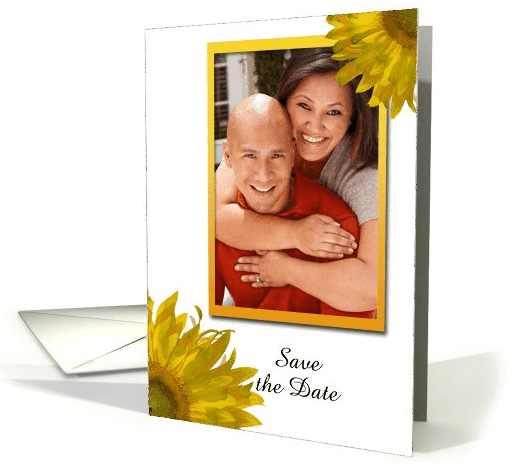
I am a certified floral and nature photographer and mother of two from St Charles, Illinois.
I love to take pictures of flowers and create wedding invitations, announcements and cards using my images. I have always wanted an outlet to sell my photographs, and through GCU and the Print on Demand Industry, I am able to do so.
Sunflowers are my absolute favorite flower and I love to use them in my products.
Share this:

Tips and Tricks: Custom Requests

I hear from GCU that customer requests remain a popular option for shoppers looking for that extra special, personalized card design – yay!
I also hear that at the moment, a more than usual amount of custom requests are going unanswered. That’s not so yay.
If you’re going on vacation and taking a summer holiday, remember that you can alter your automatic message to customers by going to Manage Store > Images & Cards > Global Preferences. Here you can make changes to your custom request message such as, “On vacation and unavailable until 8/12. If your request can wait until then, I’ll contact you on my return.”
If you don’t want to accept custom requests at all for whatever reason, then go through the same steps above, except your custom request message should then be something like, “Thank you for your interest in my cards at GCU. At this time, I am not accepting custom requests. I’m sure another artists will be able to better accommodate you. Have a great day.”
At that point, if you STILL get a custom request (because let’s face it, people sometimes don’t read), then do not ignore it. Send the customer a message stating that you aren’t doing custom requests OR “reject” the request via the custom request tool (see below).
The point is, you need to make some kind of contact, not just let these requests languish.
And speaking of contact… some artists are hitting “REPLY” to the notification e-mail. This sends your reply to GCU, not the customer! Instead, you should be using the custom request tool on the GCU site.
You’ll find a link in the notification e-mail, but you can also go to Manage Store > Images & Cards > Manage Custom Requests where you’ll find a list of all your custom requests. You can contact requestor, accept request, and reject request. It works, so start using it.
If you have questions re: custom requests, let’s have ’em. There are plenty of experienced artists here who are willing to help.
Share this:

Dash of Inspiration – Christmas in July, Part 4
A Dash of Inspiration, A Cup of Creativity by Doreen
Christmas in July, Part IV

Week four of our Christmas in July Series – One of the most valuable tools any of us have at our fingertips is the World Wide Web. Earlier in this series I mentioned using this resource to research customs, colors and verbiage used for holidays and occasions you are not completely familiar with, but it’s also our very own library and classroom! Though I have a wonderfully up-to-date library of books in my studio, I find these days that when I want to create an effect or element that I’ve never attempted before, one quick search and I am lead through the doors of free online classrooms!
Usually I find that the tutorial does not create exactly what I was after, but they always give me enough knowledge base to then tweak these steps and allow the vision in my mind to be put to screen. So, this week I’m offering links to some great tutorials for Photoshop, Paint Shop Pro and Illustrator users. I would encourage you to step out of the ‘what you know’ box and learn something new . . . there is no end to the uses and creations you can make when you learn just one new design technique!
PHOTOSHOP Users
45 Best Light Effect Tutorials in Photoshop by Akash.FuRax
How to Create and decorate Christmas tree in Photoshop by ART-D Posted in Adobe Photoshop
Create a Seamless Pattern Tile for Christmas by Johnson Koh, an Art Director based in Singapore
PAINT SHOP PRO Users
Ribbon Twisting Tutorial by Jemima
Michele’s Paint Shop Newbie 101
Adobe ILLUSTRATOR Users
Adobe Illustrator: Christmas Lights by Corey Barker at LayersMagazine.com
Design Gift Boxes Using Illustrator’s 3D Tools by Peter Akuratny at VectorTuts+
For those new to the GCU Community you can catch up with our Dash of Inspiration posts here: Salon of Art Dash of Inspiration
Remember to keep tuning in Mondays in July, the Dash of Inspiration will be offering inspiration and design freebies to help you get those new 2012 Holiday Cards on the market! ENJOY!

Last year I had a client that said “I want a holiday card that is both ‘home’ related and not ‘realtor typical’ to send from my real estate office.” For some reason, what came to my mind was a play on “there’s no place like home” and thanks to the world of tutorials out there, I was able to improve my design skills enough to be able to create this image which the client was extremely happy with . . . and many other customers too!
Share this:

Critique Clinic – July 20-22, 2012

How does it work? For three days a week (Friday-Sunday midnight), I will open the clinic to any artist who wants an honest peer review and critique of a card which gets plenty of clicks but no sales, so something’s probably not quite right, or you’ve got a new design you want to test drive, or you’re unsure about the marketability of a card. Or perhaps you’re a newbie who isn’t sure if a recently submitted card is up to a marketable standard. Anyone is welcome to participate. In fact, I encourage everyone to at least look at the cards in question and read the critique comments – you may learn something. The purpose of the clinic is to help artists improve the commercial appeal and marketability of their cards.
THE RULES
- ONE card per artist only.
- Card must be for sale at Greeting Card Universe.
- We will take an unlimited number of artists, including those who have submitted recently, HOWEVER I reserve the right to close a clinic for the day if the submissions become overwhelming. If the clinic has been closed, and you submit a card, your comment will be deleted.
- To submit a card for critique, post a link to the card at GCU in the comments section of this clinic post. Allowances will be made if you’ve had a card declined, or made a new design you’d like advice on. Give us the link where we can see the card, such as your private gallery, Flickr, etc.
- Any artist is free to comment and/or give a critique of a submitted card. HOWEVER, post-and-run comments like “great card” or “you suck” will not be tolerated, nor will abuse. Criticism should be constructive, not destructive. Play nice or you will be banned.
- I also won’t tolerate temper tantrums if you decide your “artistic integrity” is being stepped on because you asked for a critique, and someone told you the photo you’re using isn’t in focus. If you can’t take honest criticism, don’t submit. Once gets you a warning; twice and you’re banned from submitting in the future.
- Artists who critique may do so by giving their opinion, posting an example of another card, or pointing the submitter to a video, on-line article, or other helpful suggestion.
- Don’t forget that artists who are giving you tips and helpful advice are volunteering their time and trouble. Be nice. A link back to their store on your website or blog is appreciated (but not mandatory).
- You are free not to take any advice offered. There’s no guarantee any card will be a bestseller, so don’t come into the clinic with unrealistic expectations.
- Rules may change as we go along and we see how things turn out, okay?
So without any further ado, I declare this week’s Critique Clinic open!
Share this:

Font Frenzy: Brittney Murphy

Today, I’m bringing to you a collection of fonts by creator Brittney Murphy. I like many of her fonts, which have real “curb appeal.” One of my current favorites is Simply Glamorous, which makes a good substitute for Scriptina. Here’s a small sample to give you a taste:

I’ll give you a tip: sometimes on really skinny fonts, the text tends to be too light against the card’s background. If that’s the case, and there’s no BOLD option, then just duplicate the text layer a couple of times, which will darken it up. Of course, make sure your text is where you want it first, or once you have your text layers duplicated to the darkness you want, merge those layers into one layer.
All Brittney Murphy’s fonts are OK for commercial use with a $5 donation per font. That’s a real bargain!
You can find a lot of her fonts listed on DaFont or at her website.
Share this:

Design Spotlight: Pamela Jorgensen
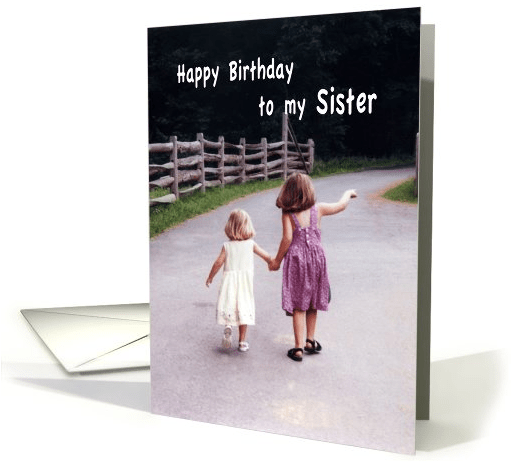
Today’s Design Spotlight shines on Pamela Jorgensen of Pam J Arts who’s been a GCU artist since 2008 – an all around, professional artist who produces great cards!
_________________________
Share this:

Dash of Inspiration – Christmas in July, Part 3
A Dash of Inspiration, A Cup of Creativity by Doreen
Christmas in July, Part III
Continuing this Christmas in July Series – in Part 3 I’ll give you some fun links to Shape files and Holiday Dingbats. Using shapes (in Photoshop they are Shape Files .CHS) can be very handy when you need that extra design element.
The beauty of Shape files is that you can make them any size you wish, so you don’t need to worry about the resolution of the shape itself. When you create the shape to fit your image file, it will automatically conform to the resolution you are working in. Shapes are wonderful for silhouette effects, but you can just as easily add color and depth to them by simply creating the shape the size you want it, then Rasterize the layer and it acts like any other image so you can add color or styles making it unique to you and your design.
Another fun element we’ve chatted about before is Dingbat Fonts. I’ve already told you how to create elements with Dingbats back in January of 2011 so visit the Who are You Calling a Dingbat Dash of Creativity if you are new to the world of dingbats.
I would encourage you when working with Shapes and turning Dingbats into elements that you do your creating in a separate 300dpi transparent 10×10-inch file. This allows you, when you’ve created something wonderful, to save the element by itself with the layers in tact and access that element whenever you wish to use again. This allows you to always have a fresh, large copy of your new element the next time you may need it.
Here we go with our resources for Week 3:
Set of 76 Christmas Silhouette Shapes by All-Silhouettes.com
Xmas Shapes by Camxso at deviantART.com
For the following you will need to create an Adobe login to download, but it’s free and I’ve been a member for years after registering Adobe software and I’ve found it to be a safe environment.
Christmas Shapes Set 1 by Michelle Hornecker at Adobe.com
Christmas Shapes Set 2 by Michelle Hornecker at Adobe.com
Christmas Shapes Set 3 by Michelle Hornecker at Adobe.com
Christmas – Debbie (a Freeware DINGBAT Font)
Christmas Cheer (a Freeware DINGBAT Font)
Christmas Wreaths (a Freeware DINGBAT Font)
ChristmasTime (a Freeware DINGBAT Font)
For those new to the GCU Community you can catch up with our Dash of Inspiration posts here at the Salon of Art: Dash of Inspiration.
Remember to keep tuning in Mondays in July, the Dash of Inspiration will be offering inspiration and design freebies to help you get those new 2012 Holiday Cards on the market! ENJOY!

An example of using individual shapes, modifying them and combining them to create the element you want. In this case the bike was a shape, the girl was a shape but she had short hair so when I Rasterized the layer and combined the bike and the girl together, I was able to give her long flowing hair for a sexier look.
Share this:

Critique Clinic – July 13-15, 2012
How does it work? For three days a week (Friday-Sunday midnight), I will open the clinic to any artist who wants an honest peer review and critique of a card which gets plenty of clicks but no sales, so something’s probably not quite right, or you’ve got a new design you want to test drive, or you’re unsure about the marketability of a card. Or perhaps you’re a newbie who isn’t sure if a recently submitted card is up to a marketable standard. Anyone is welcome to participate. In fact, I encourage everyone to at least look at the cards in question and read the critique comments – you may learn something. The purpose of the clinic is to help artists improve the commercial appeal and marketability of their cards.
THE RULES
- ONE card per artist only.
- Card must be for sale at Greeting Card Universe.
- We will take an unlimited number of artists, including those who have submitted recently, HOWEVER I reserve the right to close a clinic for the day if the submissions become overwhelming. If the clinic has been closed, and you submit a card, your comment will be deleted.
- To submit a card for critique, post a link to the card at GCU in the comments section of this clinic post. Allowances will be made if you’ve had a card declined, or made a new design you’d like advice on. Give us the link where we can see the card, such as your private gallery, Flickr, etc.
- Any artist is free to comment and/or give a critique of a submitted card. HOWEVER, post-and-run comments like “great card” or “you suck” will not be tolerated, nor will abuse. Criticism should be constructive, not destructive. Play nice or you will be banned.
- I also won’t tolerate temper tantrums if you decide your “artistic integrity” is being stepped on because you asked for a critique, and someone told you the photo you’re using isn’t in focus. If you can’t take honest criticism, don’t submit. Once gets you a warning; twice and you’re banned from submitting in the future.
- Artists who critique may do so by giving their opinion, posting an example of another card, or pointing the submitter to a video, on-line article, or other helpful suggestion.
- Don’t forget that artists who are giving you tips and helpful advice are volunteering their time and trouble. Be nice. A link back to their store on your website or blog is appreciated (but not mandatory).
- You are free not to take any advice offered. There’s no guarantee any card will be a bestseller, so don’t come into the clinic with unrealistic expectations.
- Rules may change as we go along and we see how things turn out, okay?
So without any further ado, I declare this week’s Critique Clinic open!
Share this:

Inspiration Station: Color Your World

Today, I’m sharing a cool web tool I discovered that makes creativity a real blast!
Chip It! is brought to us by Sherwin Williams – yes, the paint manufacturer. I’ve seen similar tools, but this one’s really neat. What does it do? It generates color palettes based on photographs (or graphics) of your choice.
How does it work? You have a couple of options.
First, you can enter a URL. Suppose you’re surfing the web and come across a picture you like. You adore the color combos and would like to use those same colors in your designs. Enter the URL of the site, pick the desired picture from the array (assuming there’s more than one picture on the page), and click the button. You’ll be rewarded with an expandable color palette containing the main colors which you can save and use later.
You can also upload their bookmarketlet by dragging the icon to your browser’s toolbar, meaning you won’t have to return to the website to get palettes from websites.
Second, you can upload your own photo, but to be honest, I can make color palettes from my own photos all day long. However, you do have that option.
You won’t get hex numbers, but once you have the palette, you can save the image and use it in your graphics editing program. I found it very easy to use, and the URL option did not require registration.
This might come in very handy when you’re viewing all those inspiring Christmas, Hanukkah, and Kwaanza sites, and you see a color combination you think will really pop on your card designs.
Have fun!
Share this:

Design Spotlight: Cathie Richardson
Today’s Design Spotlight shines on Cathie Richardson who’s been a GCU artist since 2007 – she produces beautiful watercolors!
_________________________

I like to draw and paint flowers the best but also want to challenge myself with structures and people. I like to sketch victorian style houses, antique things, outdoor cafes and such that I see when I travel to different places.
This card was inspired by a little outdoor cafe I saw on a trip to Oregon several years ago. I live in northern Nevada and like to visit the historical places around the area and sketch the crumbling rock houses and old barns that people used to live in.
I keep myself busy putting my ideas and sketches into needlework patterns and greeting card designs.


