Design Spotlight: Jenny Fenlason

Today, our Design Spotlight falls on Jenny Fenlason of JenGogh Designs – very cute stuff!
_________________________
 I’m a full time wife and mother who began dabbling in greeting card creation after winning some card contests. I’ve always enjoyed being creative in writing, drawing, painting and most recently photography. I have no training in any visual arts but I do have an English degree (which I try to keep quiet, because I know I don’t write or speak properly.)
Until two years ago, I never considered combining those interests to designing greeting cards. I also enjoy humor, and have a very difficult time creating cards of a serious nature, but I occasionally try. Designing cards is a hobby that provides me with a creative outlet and I’m thankful for GCU and the opportunities I have to put my creations out there.
I have a strange tendency to take pictures of food so it’s fitting that one of my most popular cards, and a personal favorite, features an egg. I originally designed this as a friendship card, but it has also been popular as a “sorry for your accident” card. When I created this card, I drew his face with a marker, but my technology has improved (I was given a pen tablet for Christmas 2010) so now, I can create all food facial features digitally.
Unfortunately, I have more ideas than I have time to create. My involvement with church, leading a mom’s group, homeschooling, and attempting to keep the people in my house clothed and fed (which is more difficult than I ever thought it would be some days) doesn’t always leave much time for design work, but I try to update my store when I get the chance. I also suffer from a debilitating Facebook addiction, which doesn’t help my work ethic. So please, stop by JenGogh Designs on Facebook to say hi and remind me to get to work.
Share this:

Dash of Inspiration – Artifacts … the Facts
A Dash of Inspiration, A Cup of Creativity by Doreen
Artifacts … The Facts

This has been an interesting topic of discussion, so I thought it might be fun to further investigate the Definition of Artifacts and how it relates to those of us creating high-quality imagery. So let’s start with the definition of Artifact in the context we are referring to:
Here are two definitions of Artifact appropriate for digital mediums since artifacts are usually the result of something we choose to incorporate into our creation; either during camera setup for a photograph or during digital scanning or processing.
The Science Dictionary Definition:
An artificial product or effect observed in a natural system, especially one introduced by the technology used in scientific investigation or by experimental error.
Computer Desktop Encyclopedia:
A distortion in an image or sound caused by a limitation or malfunction in the hardware or software. Artifacts may or may not be easily detectable. Under intense inspection, one might find artifacts all the time, but a few pixels out of balance or a few milliseconds of abnormal sound often go undetected.
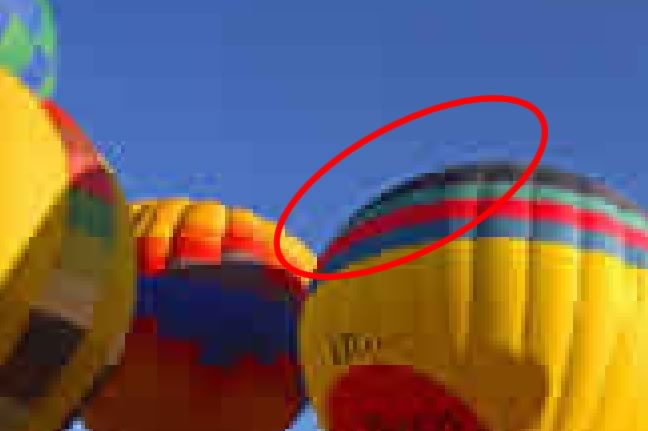
Part of the reason we are seeing more and more ‘artifacts’ in imagery these days is that digital cameras often shoot in JPEG format which is a compressed file format. From the the moment of capture, compression of data begins and every time that file is saved in a JPEG format it compresses more and more data, and every time that JPEG is opened, it has to try and recreate missing data which is where the artifacts come from – pieces of data CREATED TO REPLACE MISSING IMAGE DATA – ouch!
Courtesy of Harvard.edu
Today most DSLRs are offering a RAW File Format to shoot in, as do all Pro-Level Cameras. This is definitely the way to go if your camera offers it. Though I won’t get into all the reasons why, let’s say reducing the artifacts from compression loss by not shooting in a compressed format is one very good reason.
Okay now, let’s look at many of reasons that artifacts end up in our imagery so we can better recognize it in our own images and work to avoid it:
- In JPEG captured/saved images there are several types of artifacts which can haunt your image:
- Posterizing in areas which should be smooth gradients
- Staircase noise (jagged) around edges with curves
- Buzzing or what some call “mosquito noise” around edges
- Blockiness/busy areas sometimes called quilting or checkerboard effect
- A blurring or smudged appearance and/or light halos around dark areas of an image
- Color distortion, known as color noise or in a gray-scale image it can appear grainy or patchy

Courtesy of the Yale Library
It’s important to keep in mind that these types of artifacts can appear in ANY DIGITAL ART form, regardless of whether it began as a photograph or not. If you save your work in JPEG format as you work on it, you are doing irreversible damage to the data. When artifacts appear in other image formats (other than JPEG) it usually is because they have been converted from a JPEG somewhere in the history of the image file.
In photography under certain conditions, the image captured by your DSLR can have too much information, creating color noise and digital artifacts in the photo; particularly when you’re shooting at low-light levels (under-exposure) and/or shooting with an ISO higher than 100. Color noise artifacts can also be a found in images captured by low-end/low-resolution digital cameras.

Courtesy of Darren Rowse
- Generation Loss refers to the loss of quality between subsequent copies of data such as; saving a compressed digital file over and over again. Anything that when copying (like making a copy of a copy on a copy machine) results in a further reduction in quality which is considered a form of generation loss. Here is another example: For those of us who have shot photographs on film, that negative becomes the First Generation. We then make a print, that is the 2nd Generation. Now if you scan that print in order to get a digital file, that is Third Generation. The greeting card or print from that digital file is the FOURTH Generation. You will see a significant loss in quality from the 1st generation to the digital version.
- In digital cameras, artifacts may be produced when performing digital zoom. When analog material is converted to digital, tiny discrepancies (quantization errors) may result (see below for links to learn more about digital vs optical zoom).
-

Courtesy of Mobil Phone Reviews

Scanned images – whether scanning a negative, photograph or artwork into digital file format, they all can have noise caused by the scanning sensor. Scanners are difficult tools to use to truly create a hi-resolution, artifact free, color-balanced file worthy of using on your Print-on-Demand sites. You really need to use a good quality photo-scanner, so you can make use of the extensive software they come with which allow you to correct color noise in specific channels while preserving the edge and image details for a fine-tuned noise reduction scan.
You can and should learn to recognize these effects in your own images, plus you will know how they got there and how to avoid them in the future. Though there are many ways to reduce artifacts in images out there, there is really no way to remove them entirely and in most cases this means that the image quality is just not good enough to be considered something you would print and sell. So I have not offered any links to ways for artifact removal. Instead I’ve offered some links to avoid them by making better choices.
How to Choose the Right ISO for your Digital Photography by Darren Rowse
Understanding JPEG Formats from the Yale Tutorial Library
Learn About Orb Artifacts Caused by Light Sources
Optical vs. Digital Zoom by Photoxels
Share this:

Critique Clinic – March 16-18, 2012

How does it work? For three days a week (Friday-Sunday midnight), I will open the clinic to any artist who wants an honest peer review and critique of a card which gets plenty of clicks but no sales, so something’s probably not quite right, or you’ve got a new design you want to test drive, or you’re unsure about the marketability of a card. Or perhaps you’re a newbie who isn’t sure if a recently submitted card is up to a marketable standard. Anyone is welcome to participate. In fact, I encourage everyone to at least look at the cards in question and read the critique comments – you may learn something. The purpose of the clinic is to help artists improve the commercial appeal and marketability of their cards.
THE RULES
- ONE card per artist only.
- Card must be for sale at Greeting Card Universe.
- We will take an unlimited number of artists, including those who have submitted recently, HOWEVER I reserve the right to close a clinic for the day if the submissions become overwhelming. If the clinic has been closed, and you submit a card, your comment will be deleted.
- To submit a card for critique, post a link to the card at GCU in the comments section of this clinic post. Allowances will be made if you’ve had a card declined, or made a new design you’d like advice on. Give us the link where we can see the card, such as your private gallery, Flickr, etc.
- Any artist is free to comment and/or give a critique of a submitted card. HOWEVER, post-and-run comments like “great card” or “you suck” will not be tolerated, nor will abuse. Criticism should be constructive, not destructive. Play nice or you will be banned.
- I also won’t tolerate temper tantrums if you decide your “artistic integrity” is being stepped on because you asked for a critique, and someone told you the photo you’re using isn’t in focus. If you can’t take honest criticism, don’t submit. Once gets you a warning; twice and you’re banned from submitting in the future.
- Artists who critique may do so by giving their opinion, posting an example of another card, or pointing the submitter to a video, on-line article, or other helpful suggestion.
- Don’t forget that artists who are giving you tips and helpful advice are volunteering their time and trouble. Be nice. A link back to their store on your website or blog is appreciated (but not mandatory).
- You are free not to take any advice offered. There’s no guarantee any card will be a bestseller, so don’t come into the clinic with unrealistic expectations.
- Rules may change as we go along and we see how things turn out, okay?
So without any further ado, I declare this week’s Critique Clinic open!
Share this:

Inspiration Station: Public Domain Photos

Here’s a topic that some of you should find interesting: photographs in the public domain.
Now before you get all excited, let me explain that public domain photographs are not necessarily free to use commercially with no strings attached. Some sources require an “image by” credit. See “Credit Where Credit Is Due” by Doreen Erhardt for more helpful information on that topic.
Other sources assert that while the photograph(s) are in the public domain as far as they know, due diligence is required on your part to ensure you aren’t violating anyone’s copyright. Still other sources place restrictions on usage. Be sure to check Terms of Use on each individual site. Finally, be aware that while many U.S. government sites, such as NASA and the Library of Congress, host public domain photographs, the photos may not be used to imply their endorsement of any product or service.
And as always, if a photograph shows a recognizable human face, a building or structure, or a company logo, publicity and privacy rights may still be an issue no matter when the photograph was taken. In addition, it’s highly probable in the case of photographed people that a model release does not exist.
Bottom line? Public domain doesn’t necessarily mean free. Do your homework first, avoid lawsuits later. Got it? Let’s be careful out there.
Now that I’ve got you on your toes, I’ll share a site with you that will pretty much get you on your way.
Public Domain Sherpa
A very large list of links to various sites hosting public domain photographs. The author has helpfully provided a brief description of each site as well as known restrictions on use, but you should still check the TOU on each individual site.
USA.gov
Links to photo archives for many U.S. government agencies. A few of the websites listed are retired, but the majority are still live. I love to browse through the collections.
New York Public Library Picture Collection On-Line
Just what it says. I get a lot of inspiration from just looking at beautiful pictures, and I’m sure you do too.
Library of Virginia On-Line Photo Collection
Lots of interesting history here, much fun to browse.
If anybody else has anything to add to the topic, please do.
Share this:

Design Contest: Hanging With Your Peeps

The Easter Bunny tends to get all the good press, so let’s have an Easter design contest featuring peeps! I don’t mean those marshmallow guys (who are copyright protected, by the way) but chicks or chickens or eggs.
Artists may submit ONE of their own designs to the contest. Just give us a link to the card in the comments section of this post. The design must be an Easter card featuring eggs, chicks or chickens. Other than that, the choice is up to you. Regular card, photo card, customizable text card … go for it.
ACT OF KINDNESS BONUS – I will assign 3 additional votes to any artist who features the Easter card in a post on their blog (just give us the URL of your blog post). I will also assign 5 additional votes to any artists who submits a card design from another GCU artist instead of their own (give us the other artist’s name). That’s 8 votes up for grabs!
PINTERESTING BONUS – All you Pinners out there, have a special prize for you. Just create an Easter With the Peeps board and pin 5 of the submitted cards to your new board. I’ll do a random drawing at the end of the contest for a fabulous prize (to be announced).
Deadline to submit your designs is March 20th. On March 21st, I will open the voting. Whoever receives the most votes will win a $10 Amazon.com gift certificate OR 5 free card credits.
Get cracking (ha!) if you want to win!

Share this:

Dash of Inspiration – Summer Palettes
A Dash of Inspiration, A Cup of Creativity by Doreen
Summer Palettes
This week’s weather in the Sierra Foothills of California has been multi-seasonal. Monday we had a friend drop by and sat out on the deck catching up because it was simply too hot in the sun, yet Tuesday morning we awoke to several inches of snow (which made the dog happy, nothing better than a snow day for a dog) . . . it did give me a little taste of the summer months which are arriving far too quickly and that offered this week’s Dash of Inspiration!
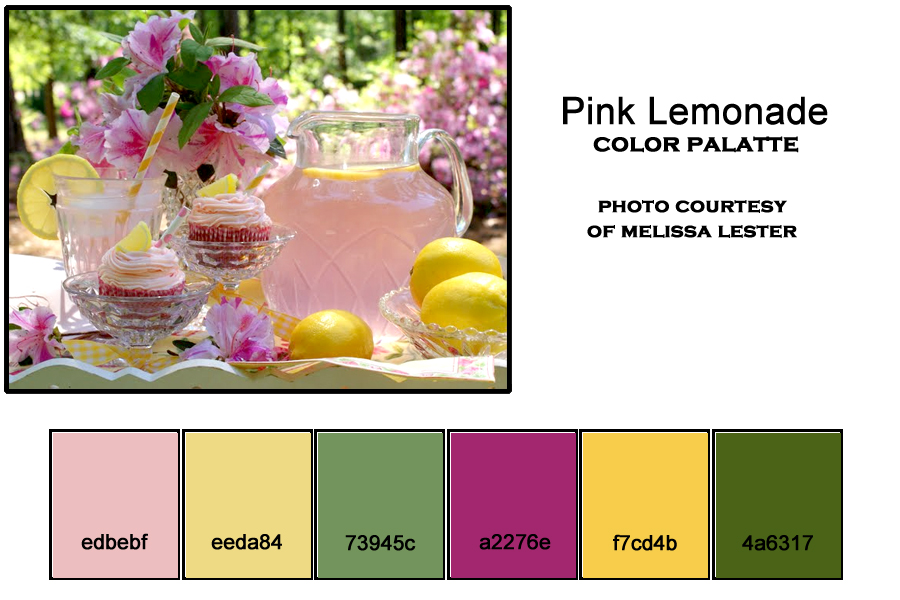
I created a couple summer color palettes for you and have also provided links for you to learn how to create your own color palettes from photographs. This is a wonderful way to get inspiration for a new design. Simply browse your photographs or those in public domain and when something catches your eye because you love the color combination, create a color palette from it and see where it takes you in a new design.
So here are some tutorial links, feel free to use the color palettes I created for this article and also be sure to stop by and take a look at the wonderful selection on Nidhi Saxena’s blog about Patterns, Colors and Designs.
Pantone Color Planner Summer 2012 by Nidhi Saxena
Creating Color Swatch from Photo in Photoshop Elements
Working with Custom Swatches – Photoshop CS5 by Lynda.com
Create a Color Palette from a Photo in Gimp by StarSunflower Studio
How to Create a Custom Image Palette in Paint Shop Pro8 by Graphic Illusions
Off you go now to enjoy making some wonderful color palettes unique to you and those from images that speak to you. There just isn’t a better way to be inspired!

Share this:

Critique Clinic – March 9-11, 2012
How does it work? For three days a week (Friday-Sunday midnight), I will open the clinic to any artist who wants an honest peer review and critique of a card which gets plenty of clicks but no sales, so something’s probably not quite right, or you’ve got a new design you want to test drive, or you’re unsure about the marketability of a card. Or perhaps you’re a newbie who isn’t sure if a recently submitted card is up to a marketable standard. Anyone is welcome to participate. In fact, I encourage everyone to at least look at the cards in question and read the critique comments – you may learn something. The purpose of the clinic is to help artists improve the commercial appeal and marketability of their cards.
THE RULES
- ONE card per artist only.
- Card must be for sale at Greeting Card Universe.
- We will take an unlimited number of artists, including those who have submitted recently, HOWEVER I reserve the right to close a clinic for the day if the submissions become overwhelming. If the clinic has been closed, and you submit a card, your comment will be deleted.
- To submit a card for critique, post a link to the card in the comments section of this clinic post. Allowances will be made if you’ve had a card declined, or made a new design you’d like advice on. Give us the link where we can see the card, such as your private gallery, Flickr, etc.
- Any artist is free to comment and/or give a critique of a submitted card. HOWEVER, post-and-run comments like “great card” or “you suck” will not be tolerated, nor will abuse. Criticism should be constructive, not destructive. Play nice or you will be banned.
- I also won’t tolerate temper tantrums if you decide your “artistic integrity” is being stepped on because you asked for a critique, and someone told you the photo you’re using isn’t in focus. If you can’t take honest criticism, don’t submit. Once gets you a warning; twice and you’re banned from submitting in the future.
- Artists who critique may do so by giving their opinion, posting an example of another card, or pointing the submitter to a video, on-line article, or other helpful suggestion.
- Don’t forget that artists who are giving you tips and helpful advice are volunteering their time and trouble. Be nice. A link back to their store on your website or blog is appreciated (but not mandatory).
- You are free not to take any advice offered. There’s no guarantee any card will be a bestseller, so don’t come into the clinic with unrealistic expectations.
- Rules may change as we go along and we see how things turn out, okay?
So without any further ado, I declare this week’s Critique Clinic open!
Share this:

Inspiration Station: Spring Fling!

Spring has sprung, and while it’s a little late to design Easter cards for this year’s sales, there’s always next year to look forward to. Savvy artists design a year or more ahead to give their designs a chance to get out there and be seen.
Here are a few places you can get inspired for your spring designs.
Pantone Fashion Colors Spring 2012
Hot new colors to use for wedding, bridesmaid, Easter, Mother’s Day, and other spring-themed cards
Christian Poetry in the Public Domain
If you’re designing cards such as “He is Risen” for Easter and you’re looking for some public domain verse, check this site. Just be sure to double-check copyright before quoting a poem verbatim, and don’t forget to add a Note to Reviewers about the verse being in the public domain to avoid having your card returned.
Free Easter Fonts
Lots of dingbats to incorporate into your designs. Be sure to check TOU for each font to be sure there are no restrictions on commercial use.
The Graphics Fairy: Easter
Vintage graphics (pre-1922 in most cases) with an Easter/spring theme. Other categories, too, that will inspire you and get your creative juices flowing. Here are the TOU. i suggest you read them before going hog wild.
Do you have any favorite sites you like to visit with a spring or Easter theme? Please share! We’d love to know what inspires you.
Share this:

The Results Are In!

It’s time to reveal the results of two contests we’ve had going over the last week!
First, in our Design Contest: The Wearin’ O’ the Green – the winner is Renae Frankz with 24 votes!
And in our Pin It To Win It Challenge, the winner (chosen by random drawing) is Handmedownz!
Congratulations and thanks to everyone who participated.
Stay tuned for the announcement of a new Design Contest for Easter in a few weeks.
Share this:

Design Spotlight: Susan Westervelt
Today, the Design Spotlight falls on Susan Westervelt, whose soft and gentle style is very appealing.
_________________________
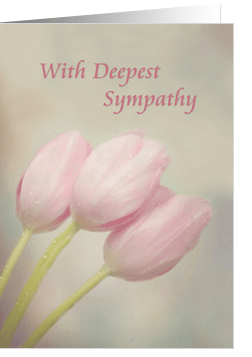 This is one of my favorite cards because I am fascinated by flowers, especially tulips, and capturing their exquisite detail in photos.
I am a passionate photographer and have been as long as I can remember, beginning with a Brownie when I was a kid.
I live in Phoenix, Arizona and am looking forward to a time when I can travel and photograph my adventures. I have two grown daughters and three grandchildren. I enjoy spending time with my family, painting, sketching and, of course, snapping away with my camera when I’m not working.
This is my third year participating in a 365 project or Photo of the Day. It’s been fun. Creating greeting cards from many of my photographs is a natural extension. I love seeing life through the lens.
I’ve been inspired by many wonderful photographers and artists here at Greeting Card Universe.


 GCU Community