Wanted Cards: Beyond the Rainbow
Part One: LGBTQIA+ Cards That Celebrate the Whole Person
For a long time, LGBTQIA+ greeting cards have been closely associated with Pride Month, rainbow flags, coming out, and messages of love and acceptance. All of these have their place, but there is a much bigger world of occasions, relationships, personalities, and celebrations waiting to be explored.
A recent development in the greeting card industry offers a timely reminder of that opportunity.
On October 14, British publisher Bare Cards introduced Loud & Proud, a collection of 12 birthday card designs representing different LGBTQIA+ identities and genders. The launch builds on an existing range that includes transgender, non-binary, anniversary, and Christmas cards.
You can read more about the collection in Greetings Today: Bare Cards Expands LGBTQIA+ Offering with Loud & Proud.
It’s an interesting example of a publisher moving beyond general LGBTQIA+ representation toward cards that speak to more specific recipients.
And that’s where the creative possibilities really begin.
Representation Is Good. Recognition Is Better.
There’s a difference between a card that says Everyone Is Welcome and one that says Happy Birthday to My Wonderful Wife, designed with two women in mind.
Both have value, but they serve different purposes.
One expresses an inclusive sentiment. The other acknowledges a particular relationship and a particular person.
A lesbian celebrating her wife’s birthday, a non-binary friend turning 30, or a transgender man celebrating his first Father’s Day may be looking for something that feels personally relevant.
The challenge for greeting card artists is to create designs that offer that recognition without reducing the recipient to a label.
After all, LGBTQIA+ people aren’t a single audience with a single aesthetic. Some love rainbows, glitter, and exuberant celebrations. Others prefer understated elegance, dry humour, vintage illustration, or something delightfully absurd.
The more variety artists offer, the more opportunities customers have to find a card that feels just right.
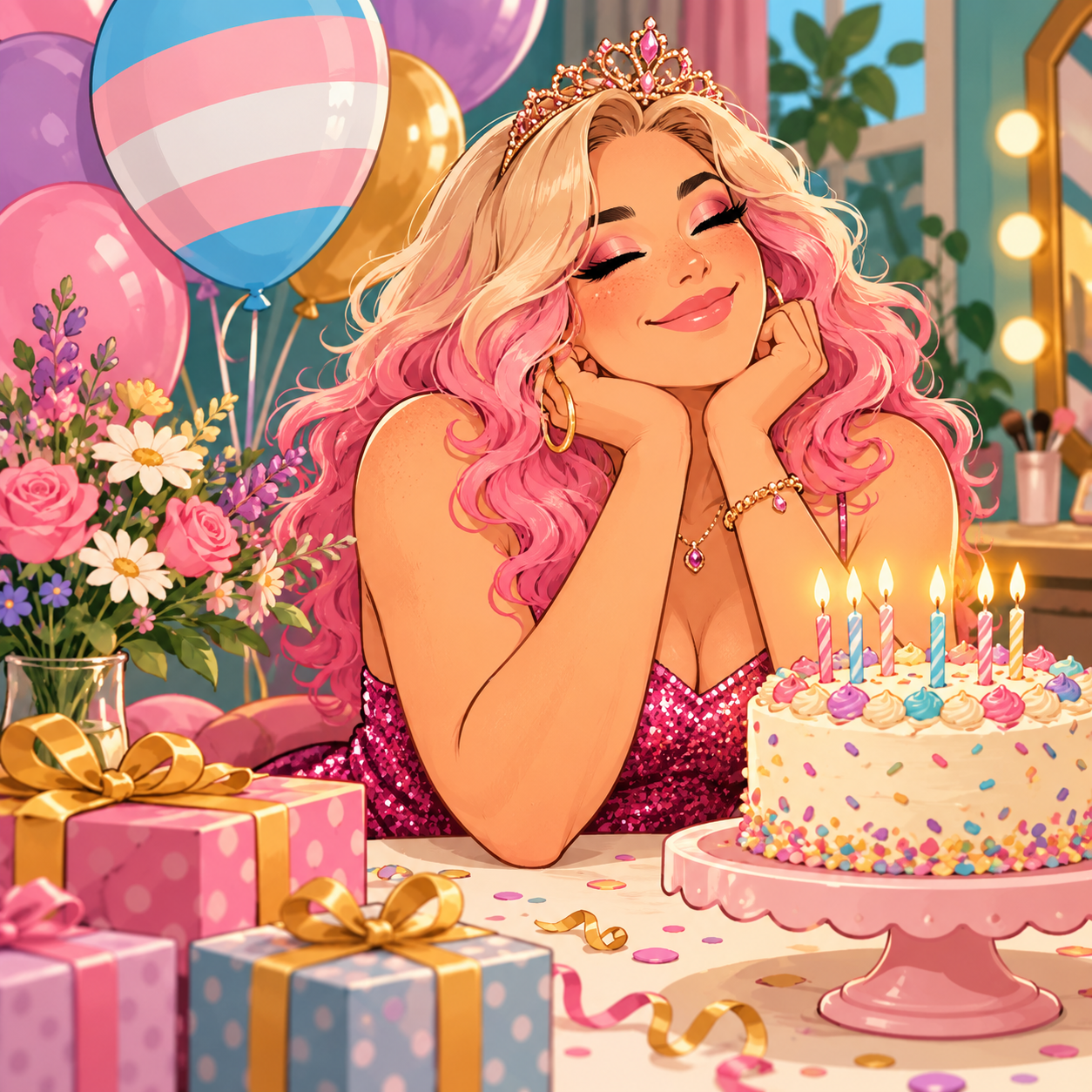
1. Birthdays Beyond the Generic Greeting
Birthday cards are an excellent place to begin.
Rather than creating another general Pride-themed design, think about the recipient’s identity, personality, and sense of humour.
Possible design directions:
- A glamorous retro birthday queen with a cheeky expression and the greeting Another Year of Being Fabulous.
- A non-binary birthday character surrounded by balloons, cake, and confetti, with Another Trip Around the Sun, Still Beyond Categorization.
- A beautifully illustrated floral birthday card with Happy Birthday to an Amazing Trans Woman.
- A bold, colourful design celebrating bisexual identity with Bi the Way, It’s Your Birthday!
- A minimalist, sophisticated birthday card for a gay man who would rather have beautiful typography than glitter.
These concepts can be playful, elegant, heartfelt, or wonderfully eccentric.
The important thing is that the design celebrates a birthday first, while making room for the recipient’s identity.
2. Relationships Deserve Their Own Designs
Romantic greeting cards offer enormous possibilities for more specific representation.
Think beyond general anniversary and Valentine’s Day cards.
Consider cards for:
- My Wife, From Your Wife
- My Husband, From Your Husband
- My Wonderful Non-Binary Partner
- Our First Anniversary as Wives
- Our First Christmas as Husbands
- My Girlfriend, My Best Friend, My Favourite Person
These aren’t necessarily new sentiments, but they become more meaningful when the artwork and wording are designed around the relationship.
For example, imagine two elderly women sitting together on a park bench, sharing a thermos of coffee.
Front: Still My Favourite Person to Grow Old With.
Inside: And there’s nobody else I’d rather complain about the weather with. Happy Anniversary, my love.
Or picture two husbands attempting to assemble an enormous Christmas tree while their cat supervises.
Front: Our Christmas. Our Chaos. Our Kind of Wonderful.
Inside: There’s nobody I’d rather make a beautiful mess with. Merry Christmas, sweetheart.
Neither card needs a rainbow to communicate the relationship.
The people, the occasion, and the affection do that beautifully.
3. Not Every Queer Card Needs a Rainbow
Rainbow imagery is joyful, recognizable, and often entirely appropriate. Identity-specific flags and colours can also be meaningful visual choices.
But they aren’t the only design vocabulary available.
Consider exploring:
Character-led illustration: Everyday people, couples, families, and friends in recognizable situations. A funny expression or familiar domestic scene can communicate more personality than a decorative symbol.
Vintage and retro styles: Mid-century advertising, Art Deco elegance, vintage comic illustration, or nostalgic typography can give identity-specific cards a distinctive visual character.
Nature and florals: Botanical illustrations, woodland creatures, flowers, landscapes, and seasonal imagery can work beautifully with LGBTQIA+ birthday and relationship messages.
Typography-led designs: Sometimes a clever phrase, beautifully arranged lettering, and a carefully chosen colour palette are all a card needs.
Humour and absurdity: Animals with attitude, ridiculous situations, unexpected visual puns, and exaggerated characters can make a card memorable.
The aim isn’t to avoid rainbow imagery. It’s to make sure it remains one creative option among many.
4. Everyday Occasions Are Worth Exploring
Pride Month is one month of the year.
Birthdays, anniversaries, Christmas, congratulations, retirement, new homes, and family celebrations happen all year long.
That creates opportunities to combine identity-specific wording with occasions that may receive less attention.
A few possibilities:
First Christmas Together: A romantic design for a same-sex couple celebrating their first holiday season as partners or spouses.
Congratulations on Your New Home: Two girlfriends or two husbands surrounded by moving boxes, a confused pet, and furniture that definitely won’t fit through the doorway.
Happy Father’s Day: A design specifically celebrating a transgender dad, with an affectionate or humorous message.
Happy Mother’s Day: A heartfelt card for a lesbian mother from her wife, or for one of two mums from their children.
Retirement: A funny card celebrating a queer friend who finally has enough free time to become everybody’s favourite troublemaker.
These are just starting points. Artists can take them in many directions, from traditional and sentimental to contemporary and comic.
5. Design for a Person, Not a Demographic
Here’s a useful exercise.
Instead of beginning with the question What would an LGBTQIA+ card look like?, imagine an actual recipient.
Perhaps she’s a 65-year-old lesbian who loves gardening, terrible jokes, and her three cats.
Perhaps he’s a young gay man celebrating his first Christmas with his husband.
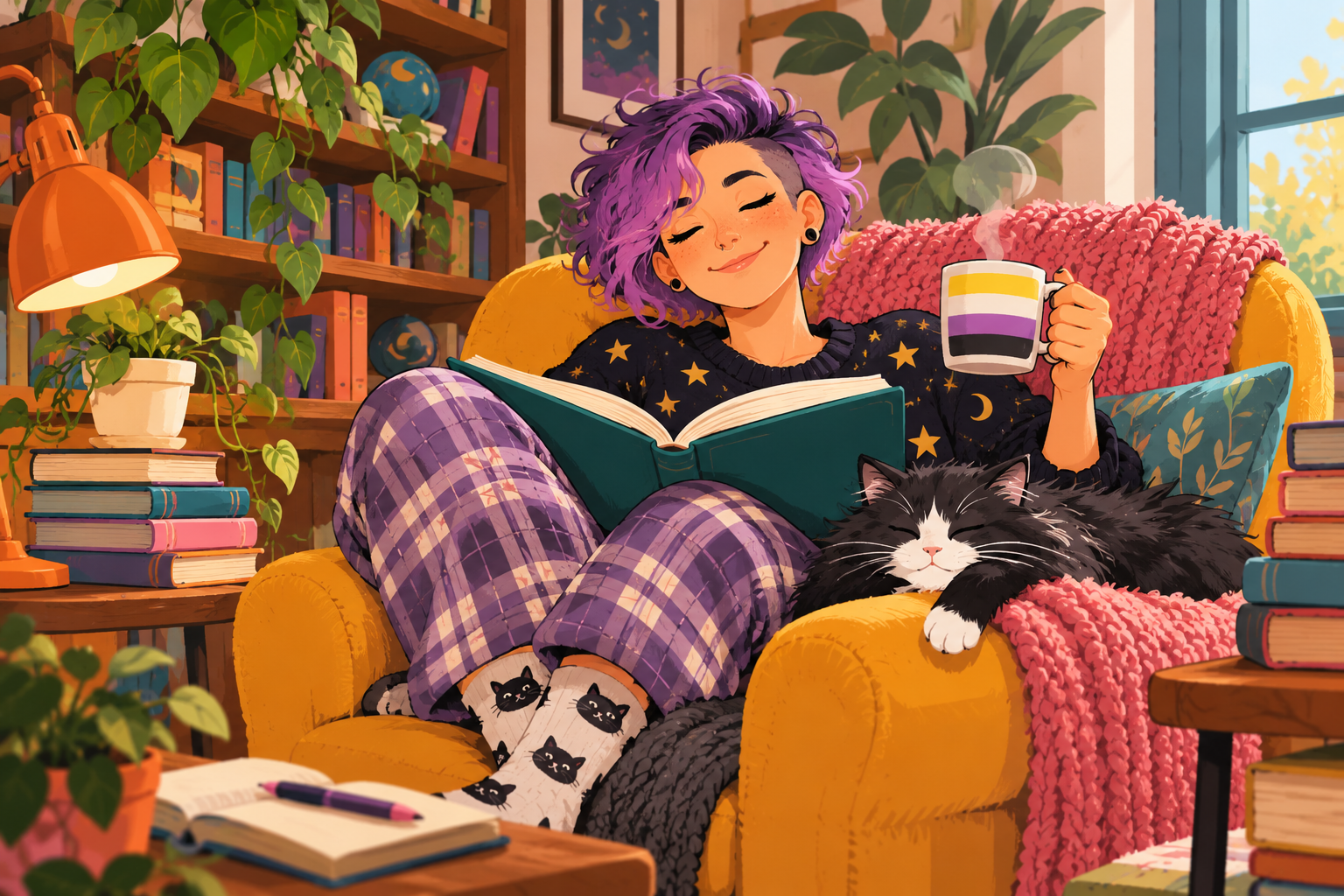
Perhaps they’re a non-binary bookworm who would much rather spend their birthday in a cosy armchair than at a noisy party.
Suddenly, the design possibilities become much more interesting.
The gardener might receive a birthday card featuring a rebellious garden gnome. The newlyweds might appreciate a humorous domestic Christmas scene. The bookworm might love an illustrated stack of novels and a message about another chapter beginning.
Identity helps make the card relevant. Personality makes it memorable.
A Creative Challenge for GCU Artists
For your next design, try combining three ingredients:
One specific recipient + One everyday occasion + One distinctive personality.
For example:
A bisexual friend + Birthday + A terrible weakness for puns.
Or:
Two husbands + Christmas + A cat who destroys decorations.
Or:
A non-binary partner + Anniversary + A shared obsession with science fiction.
Use those ingredients to create something personal, recognizable, and full of character.
Because inclusive greeting card design isn’t simply about adding more labels to existing designs.
It’s about offering more people the pleasure of finding a card that feels as though it was made especially for them.
Coming in Part Two: Finding the Right Words, where we’ll explore how thoughtful, funny, romantic, and natural wording can make identity-specific cards even more meaningful.
Happy Designing!
Corrie


