A Dash of Inspiration, A Cup of Creativity by Doreen
Composition: Framing/Alignment

Let’s keep this series going with the fifth area in the COMPOSITION grouping of the Submission Guidelines which is:
COMPOSITION: Framing/Alignment
The Submission Guidelines state this:
Care should be taken when adding a framed element to an image as well as when adding art to a card front. The format is 5×7 or 7×5 with a 1/4-inch trim line. When adding art to a greeting card front, the completed card must have a feeling of intention in the design. Declines may include, but are not limited to: slapping a square piece of art on a rectangle card surface, odd or unappealing frame techniques or matting such as ovals, poor alignment of the image so that the edges of the card are not evenly spaced, stretching an image as a method to re-size, etc.
So let’s talk about Composition: Framing/Alignment
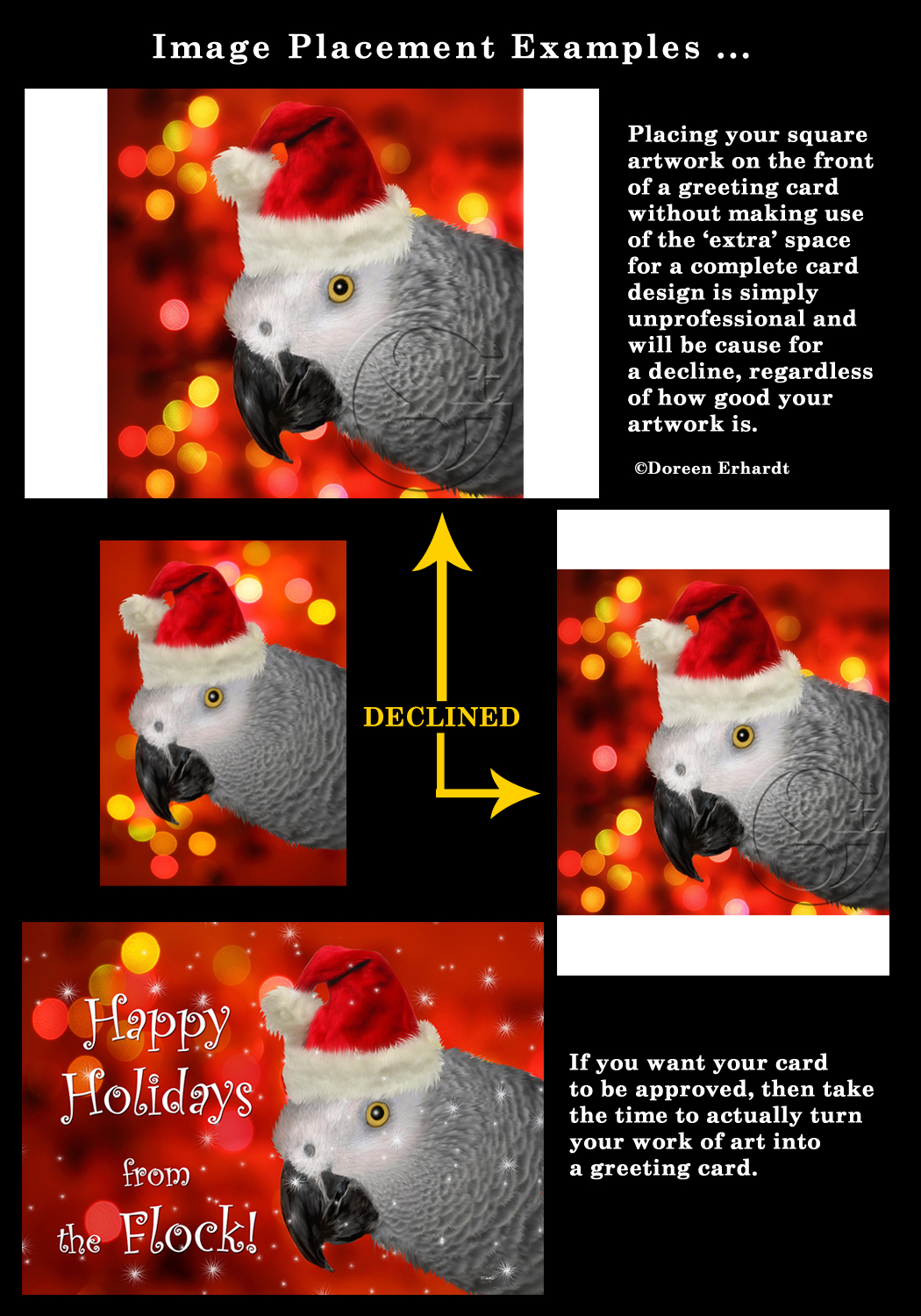
Image Dimensions: Placing a square image on a rectangle card front without working to transform the image into a 5×7 card design just looks unprofessional, yet artists do it every day. Anytime an artist is going to put their imagery on a product, they absolutely MUST modify the image appropriately to fit the products dimensions. At GCU, this ‘slapping’ of artwork without modifications are no longer acceptable. Here are some visual examples of these types of declines:
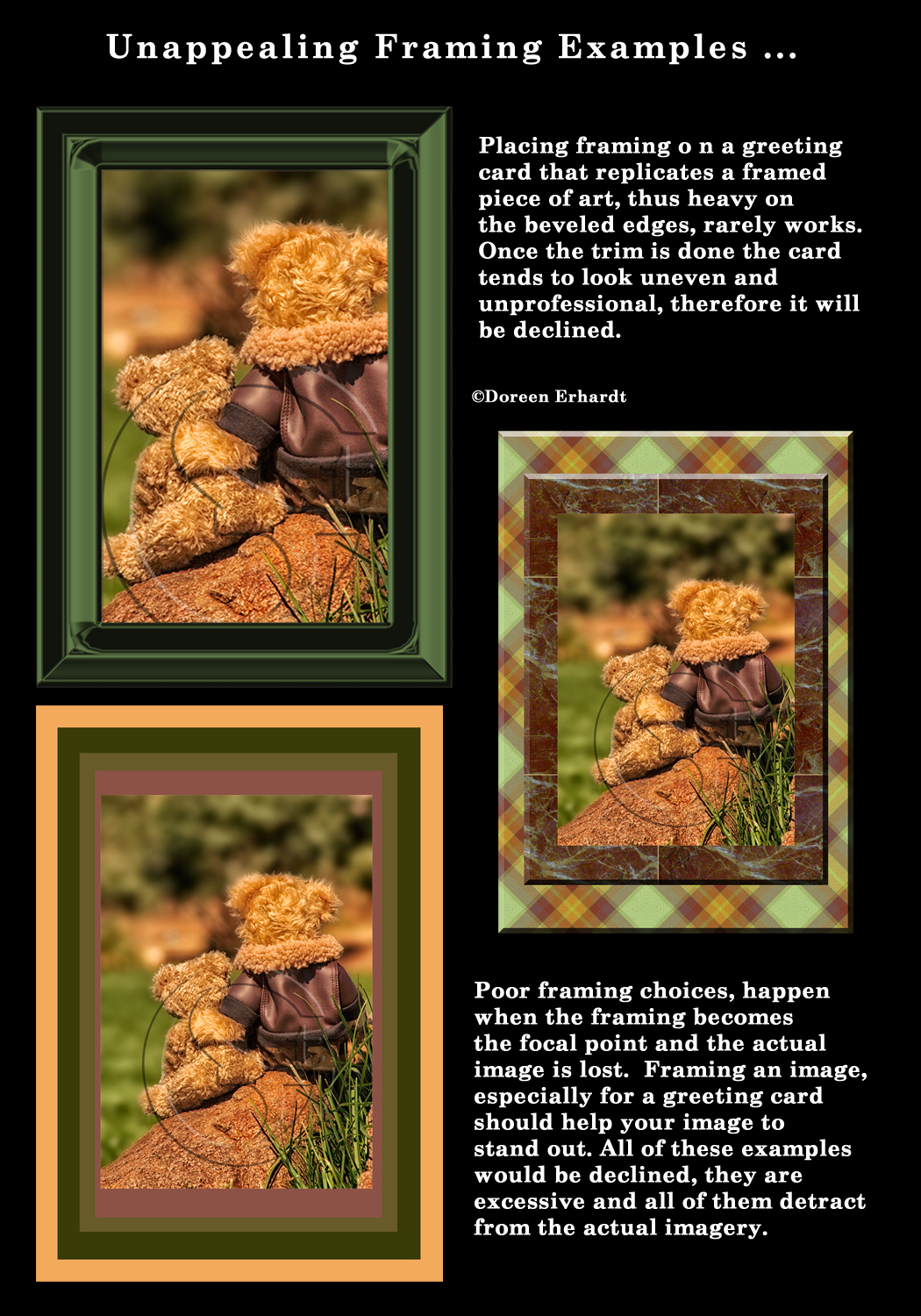
Unappealing Framing Techniques: We’ve discussed the unsightly use of beveled edges before. Beveling, when used with a light hand is perfectly acceptable for some uses, however framing your image on a greeting card with a large thick beveled frame is rarely appealing. Other framing techniques that are considered unappealing would be anything that makes the framing become the focal point rather then enhancing the imagery. Layer upon layer of borders could be considered poor technique as well. Look at these examples:
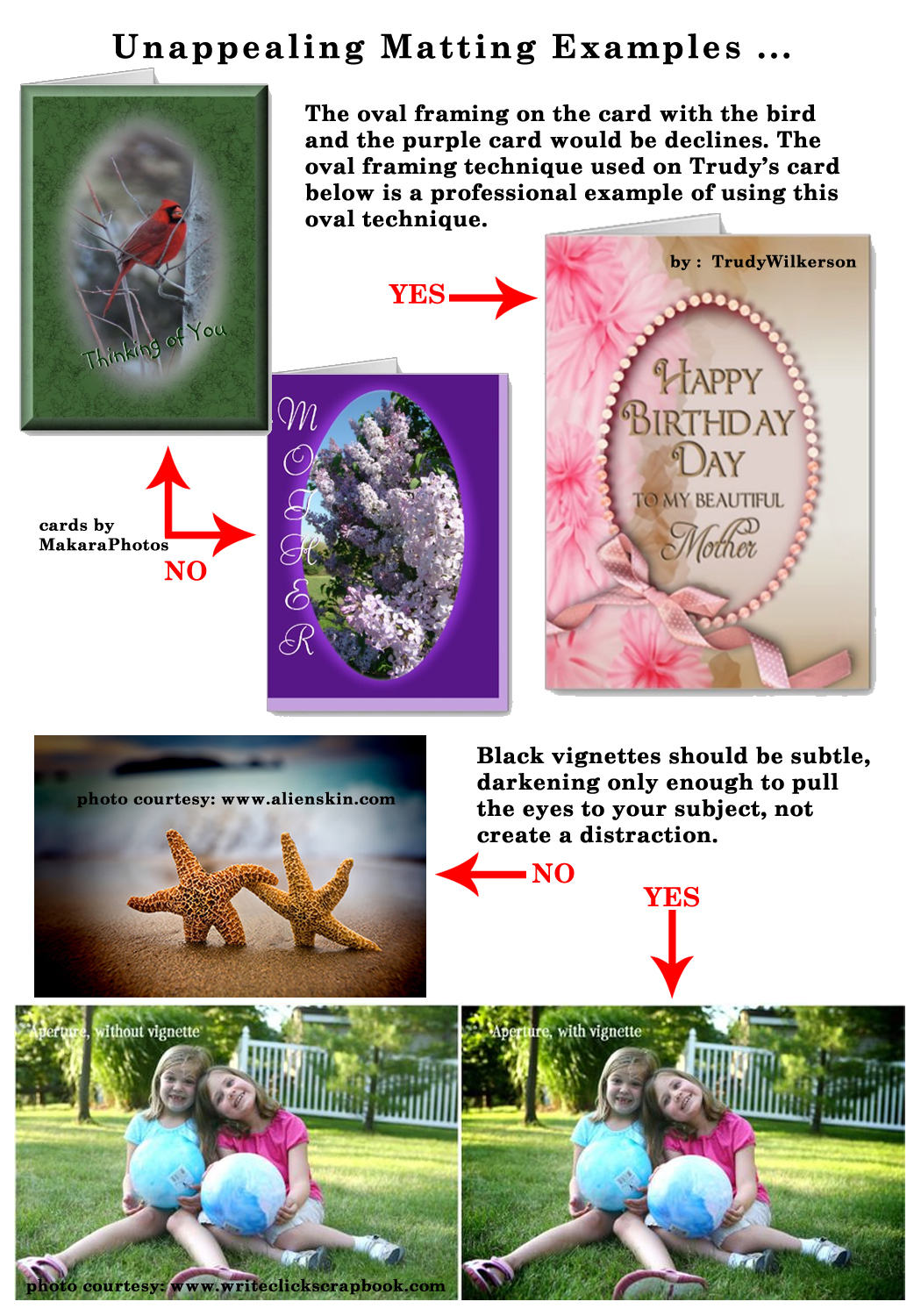
Unappealing Matting Techniques: As a general rule of thumb oval matting on a greeting card is out of date and not likely to be accepted by GCU. Oval frames are very old-fashioned, therefore an exception might be to use an elegant oval frame on a greeting card where you maintain the ‘vintage’ feel throughout the card design or when used to create a very feminine and simple design. In most cases though, oval framing just simply looks like you are trying to cover elements in a photograph that are otherwise distractions. It’s generally inappropriate for animal, landscape and masculine subjects. It can be an acceptable choice for Custom framing since it works sometimes, depending on the overall design for people portraits. Other unappealing matting techniques are unprofessionally applied vignettes. Look at these examples:
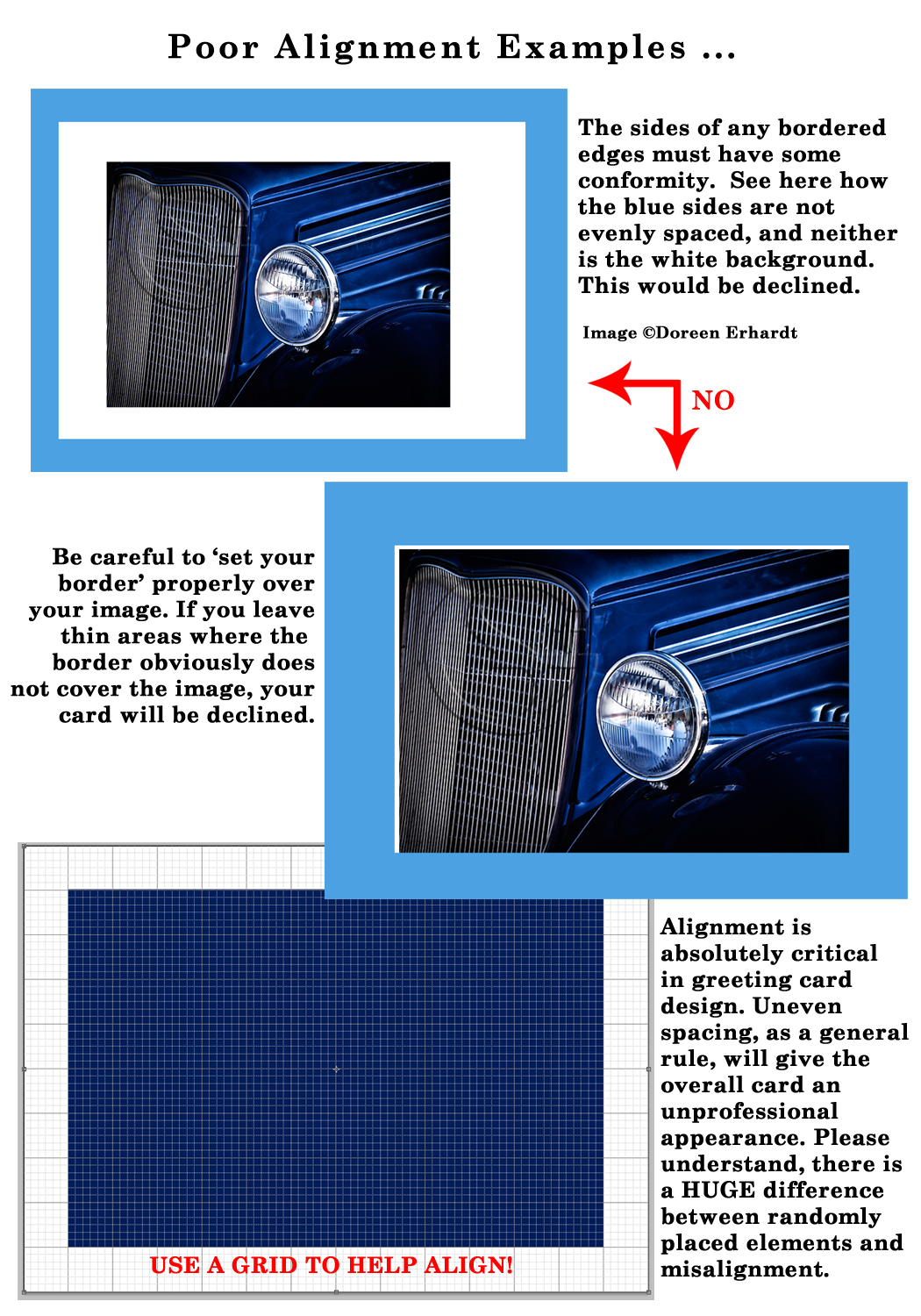
Unevenly Aligned Image: This has a commonality with the Balance of Elements segment. Just as text needs to have some alignment within the design, so do the edges of borders, framing, etc. This is simple to avoid, yet a common mistake that artists need to train their eyes to see. On greeting cards, the ‘alignment’ must look intentional and as a general rule of thumb, at least 3 of 4 sides must be evenly spaced. There are only rare exceptions where the 4th side being uneven looks appealing. A greeting card artist should be using an image creation tool that offers a Grid to lay over your image. This makes even spacing a breeze. Another common mistake that will cause a decline is not making your ‘frame/border’ cover the image equally leaving thin ’empty’ spaces on the card front.
Stretching an Image to Fit: This would seem something that need not be said, however I’m actually surprised how many images I run across on POD sites where people have actually taken a photograph/image and STRETCHED it to fit different dimensions. All I can say is DON’T EVER do that. Not only is it improper resizing, but it cause obvious distortion issues. If you need to change from a horizontal image to fit a vertical format or change a vertical image to fit a horizontal format, then do so via proper cropping and resizing methods.
Here is good reading material on this subject.
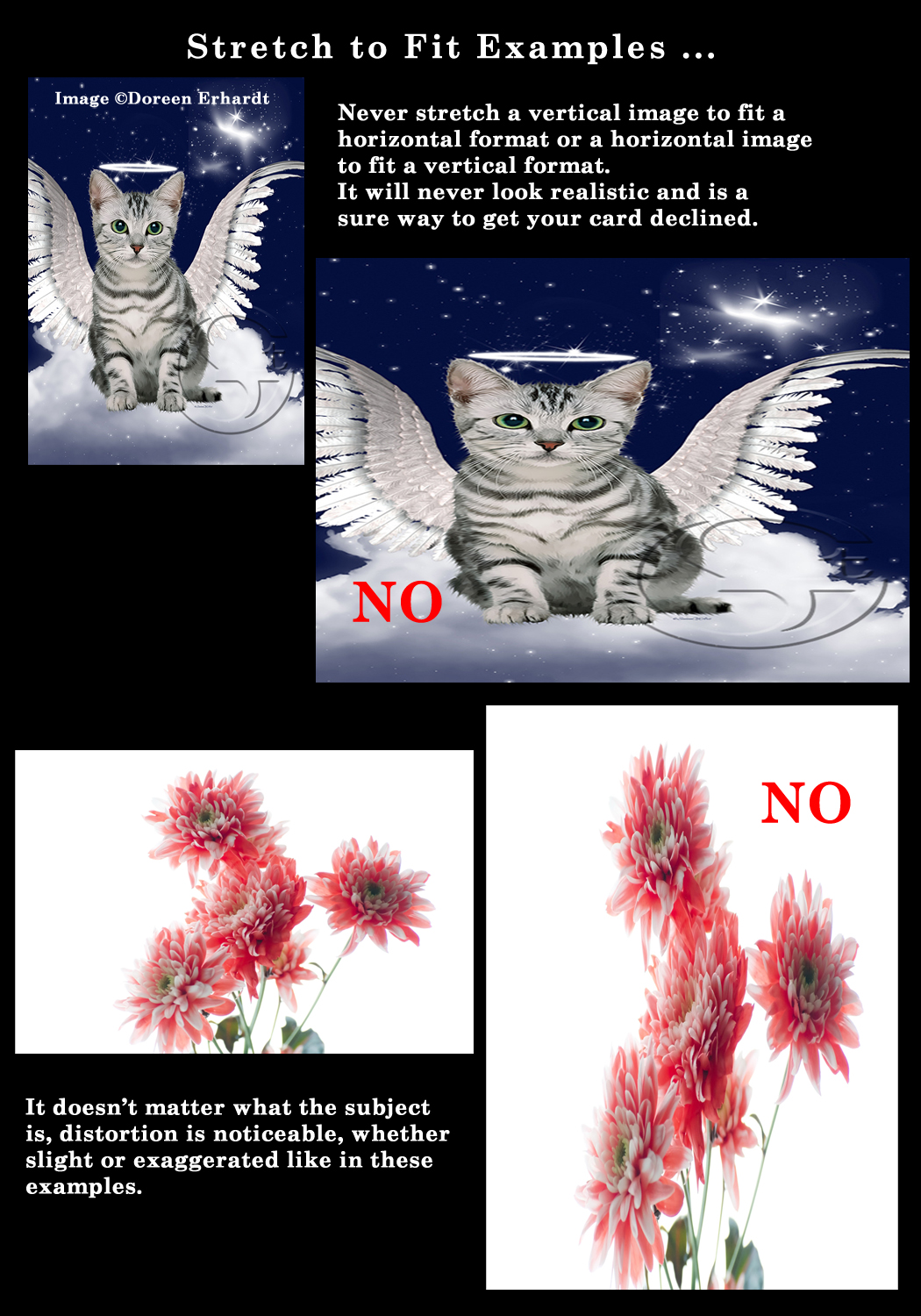
Next week we’ll have a quick refresher on Composition: Perspective since we’ve touched on this area before. We’ll then continue on to the next section of the Submission Guidelines: Typography in future installments of this series. Till next week, I hope I’ve inspired you to go look through your store and see if you can weed out any images that the reviewers will find during their weeding which might fit Composition: Framing/Alignment.
For great resources & tips visit the SalonOfArt
Share this:

Critique Clinic – May 4-5, 2013

How does it work? For three days a week (Friday-Sunday midnight), I will open the clinic to any artist who wants an honest peer review and critique of a card which gets plenty of clicks but no sales, so something’s probably not quite right, or you’ve got a new design you want to test drive, or you’re unsure about the marketability of a card. Or perhaps you’re a newbie who isn’t sure if a card is up to a marketable standard. Anyone is welcome to participate. In fact, I encourage everyone to at least look at the cards in question and read the critique comments – you may learn something. The purpose of the clinic is to help artists improve the commercial appeal and marketability of their cards.
THE RULES
- ONE card per artist only.
- Card must be intended for sale at Greeting Card Universe.
- To submit a card for critique, post a link to the card at GCU in the comments section of this clinic post. Allowances will be made if you’ve had a card declined, or made a new design you’d like advice on before submission. Give us the link where we can see the card, such as your private gallery, Flickr, Tinypic, etc. If you do give a private gallery link, be sure your private module gallery is ON. Please do not post links to your Manage Cards section – do you really want strangers tinkering with your cards? And please don’t ask us to critique a card that’s pending review – we can’t see it until it’s approved.
- Any artist is free to comment and/or give a critique of a submitted card. HOWEVER, post-and-run comments like “great card” or “you suck” will not be tolerated, nor will abuse. Criticism should be constructive, not destructive. Play nice or you will be banned.
- I also won’t tolerate temper tantrums if you decide your “artistic integrity” is being stepped on because you asked for a critique, and someone told you the photo you’re using isn’t in focus. If you can’t take honest criticism, don’t submit. Once gets you a warning; twice and you’re banned from submitting in the future.
- Artists who critique may do so by giving their opinion, posting an example of another card, or pointing the submitter to a video, on-line article, or other helpful suggestion.
- Don’t forget that artists who are giving you tips and helpful advice are volunteering their time and trouble. Be nice. A link back to their store on your website or blog is appreciated (but not mandatory).
- You are free not to take any advice offered. There’s no guarantee any card will be a bestseller, so don’t come into the clinic with unrealistic expectations.
- Rules may change as we go along and we see how things turn out, okay?
So without any further ado, I declare this week’s Critique Clinic open!
Share this:

GCU News: Design of the Month Contest – April

DESIGN OF THE MONTH CONTEST – APRIL

VOTE AND PROMOTE!
Artists who have won Design of the Day in April are automatically entered into the Design of the Month contest on Greeting Card Universe’s Facebook page. The artist who receives the most votes by May 13, 2013 will win a fabulous prize – an iPad Mini or $350!
Voters may cast one vote per day AND each person who votes is automatically entered to win a random drawing for an iPad Mini or $350!
To view entries and vote, you must be a fan of GCU’s Facebook page to see the entries and vote. To become a fan, “Like” their FB page. It’s that simple.
Check out the details of the contest.
Share this information with your FB friends, family, and supporters – get links by clicking on your card on the Voting Page. Share with Twitter followers and e-mail, too. Every vote counts! Get out there and start spreading the word with enthusiasm.
Even artists who aren’t nominated now should promote the contest to their fans and followers, too – next month, it could be you who needs the help. I also encourage all artists, whether they have a “horse” in this race or not, to vote for your favorite card.
All together now, let’s not forget to …
VOTE AND PROMOTE!
Share this:

Design Spotlight: Rosanne Casu

Today’s Design Spotlight falls on Rosanne Casu of Red Rose Digital Art, who always delivers great images and great cards!
_________________________

Hi, I am Rosanne Casu from Red Rose Digital Art and I am one of GCU’s “international” artists. I may not have been quite the first one from Australia, but pretty close, having joined several years ago. By profession, I am a scientist but I have also been a photographer for the last 10 years.
The card that I have chosen today features a photograph of a bouquet of bright orange gerberas. It’s one of my favourite images, to the point that I have it framed in my home and a poster of it on the wall of my office at work. It makes me happy every time I look at it!
I also used it to illustrate one of my more popular blog posts on photographic image composition. You can find this post at – The Rule – and my on-line image gallery. Hope that you enjoy it too.
Share this:

Design Spotlight: Steve Hannah
Today’s Design Spotlight falls on Steve Hannah at Hannah Creative, whose skill shines through in his work!
_________________________

I’m a professional illustrator and designer who has been creating and sending my own Christmas cards, as well as the occasional birthday, or get-well-soon card to family and friends for about thirty years.
I’ve never been a big fan of overly serious designs or straight up cartoons. For me, a memorable card is one that is amusing – or at least has something visually clever in the composition, and illustrated well. If that can be combined with a few well chosen words that help to drive the visual concept home, then the card is a winner.
I can not claim to succeed every time I try, but I that is my goal when developing new card ideas. A good example of that is represented in one of my best selling designs: Cave Painting.
Share this:

Dash of Inspiration: Composition – Placement/Position
A Dash of Inspiration, A Cup of Creativity by Doreen
Composition: Placement/Position
Let’s continue with a visual review and discussion of the areas listed in GCU’s Submission Guidelines. Today we’ll keep the series going with the fourth area in the COMPOSITION grouping of the Submission Guidelines which is:
COMPOSITION: Placement/Position
The Submission Guidelines state this:
A visual flow through the composition that the eye follows. It can be as your eyes move from element to element by way of placement and position, the placement of dark and light areas that your eyes are drawn to or the shape and lines created by a single object and its placement within the composition that draws the eyes in and out of the image. Declines may include, but are not limited to: elements which are cutoff, tilting buildings, poor angles, chaotic compositions, etc.
So let’s talk about Composition: Placement and Position
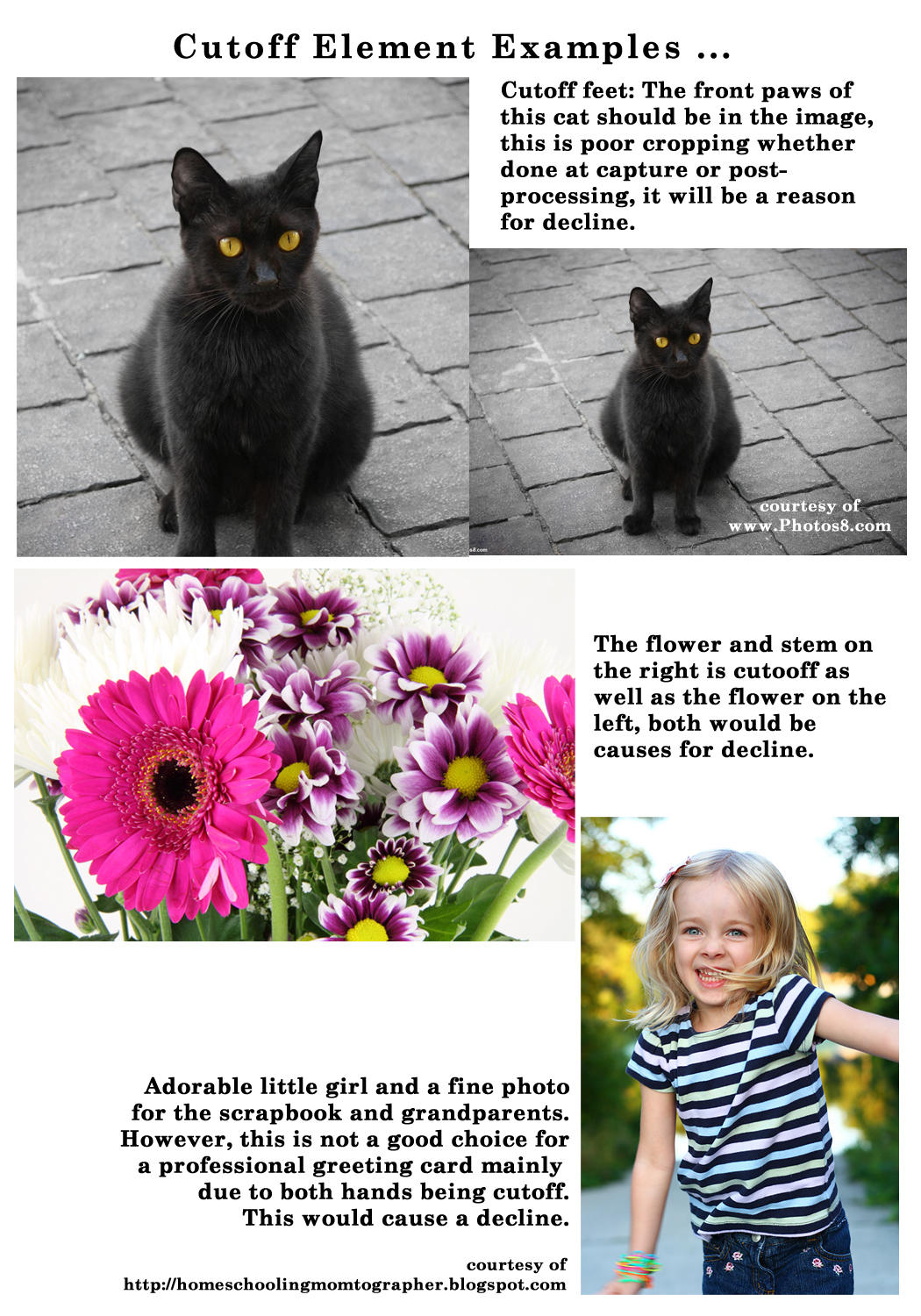
Elements which are cut off: This becomes most common when talking about cutting off hands, feet, ears, and noses of animals and people, as well as cutting off flower petals which visually are critical to the image. Artists who draw and paint don’t do this unless it’s part of their concept, in which case it always looks correct to the viewer. Photographers however, when cropping or trying to remove distractions, both during capture and just as frequently after-processing, sometimes cutoff parts of the image which give an incomplete feel to the imagery. Look at these examples.
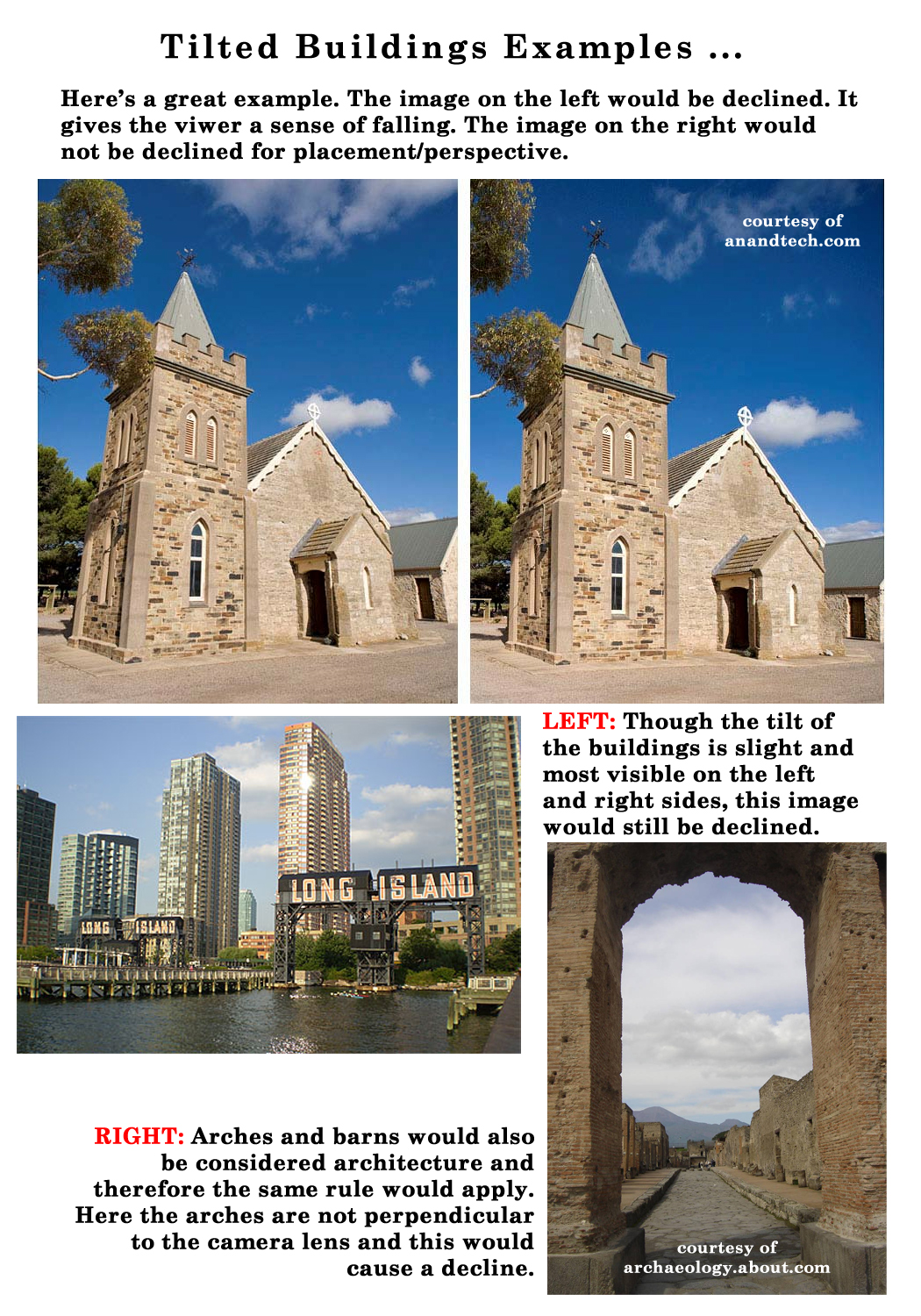
Tilting Buildings: We’ve discussed this before in the blog. As a general rule of thumb, tilting buildings in a photograph used for a greeting card will be a consistent decline at GCU. Even if well-done, a tilted building on a small 5×7 card leaves the viewer feeling disoriented, it’s just not a marketable concept for the greeting card market. It doesn’t matter if the hillside is slanted and therefore so is it cottage, it’s all perspective and this overlaps with the Submission Guidelines category, Composition: Perspective.
A good read/refresher is A Matter of Perspective
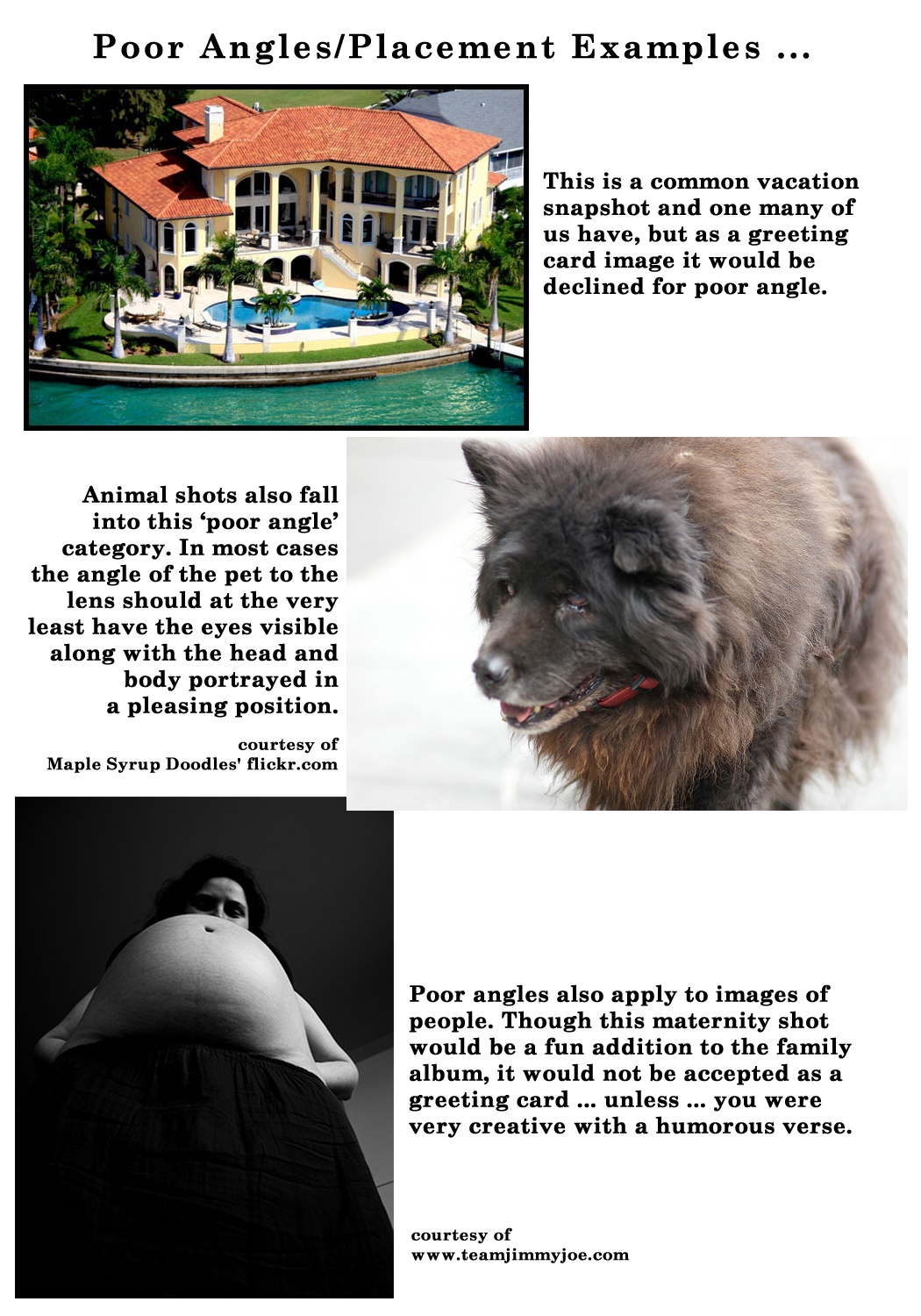
Poor Angles: Again, other areas of the guidelines overlap with this area depending on what the reviewer sees in the image. Many of these poor angle images are considered snapshots, because the photographer either didn’t find the right place to offer the best angle when composing the shot, or couldn’t get to it. This also comes into play with photographs of pets and animals. Just because Pooky Bear look adorable, doesn’t necessarily mean it’s a good image for a greeting card. These types of images are fine for your personal use, but are not considered marketable in the greeting card industry.
Chaotic Compositions: This has common elements with the Balance of Elements category since it’s a basic lack of harmony and logic to any given design. Though this often becomes a more prominent issue in designs with graphic elements, it also applies to photographs. Chaotic designs can be explained as those where no apparent subject is present, therefore the eye just roams the image and never settles on that which grabs attention. Garden photographs can often come across as chaotic if the photographer is not careful to either choose an angle and wide lens to capture a great impression of the whole garden, or carefully chooses an angle that represents just a small part of the garden without too much excess visual competition.
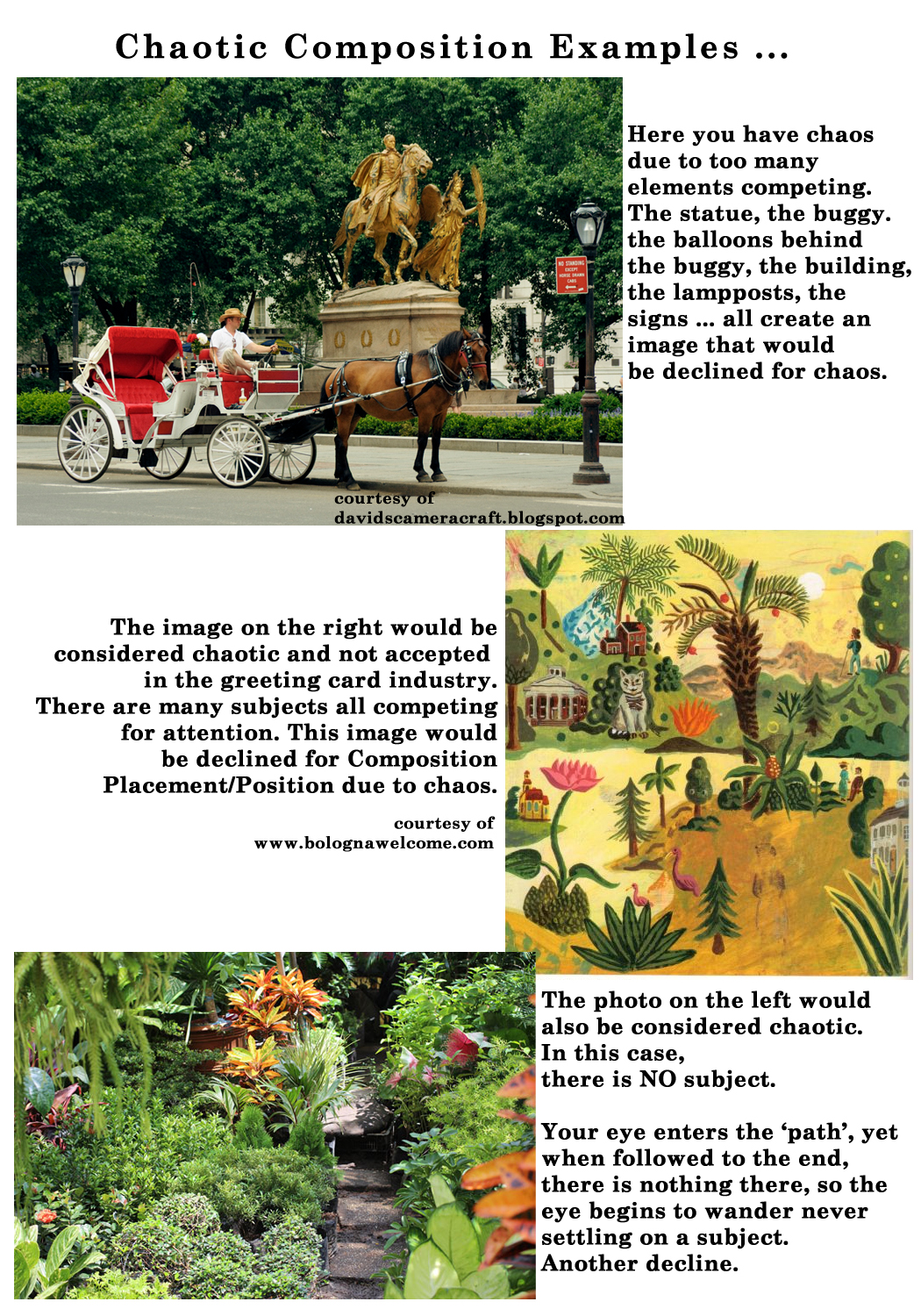
Next week we’ll tackle Composition: Framing/Alignment. Till next week, I hope I’ve inspired you to go look through your store and see if you can weed out any images that the reviewers will find during their weeding which might fit Composition: Placement/Position.
For great resources & tips visit the SalonOfArt
Share this:

Critique Clinic – April 26-28, 2013
How does it work? For three days a week (Friday-Sunday midnight), I will open the clinic to any artist who wants an honest peer review and critique of a card which gets plenty of clicks but no sales, so something’s probably not quite right, or you’ve got a new design you want to test drive, or you’re unsure about the marketability of a card. Or perhaps you’re a newbie who isn’t sure if a card is up to a marketable standard. Anyone is welcome to participate. In fact, I encourage everyone to at least look at the cards in question and read the critique comments – you may learn something. The purpose of the clinic is to help artists improve the commercial appeal and marketability of their cards.
THE RULES
- ONE card per artist only.
- Card must be intended for sale at Greeting Card Universe.
- To submit a card for critique, post a link to the card at GCU in the comments section of this clinic post. Allowances will be made if you’ve had a card declined, or made a new design you’d like advice on before submission. Give us the link where we can see the card, such as your private gallery, Flickr, Tinypic, etc. If you do give a private gallery link, be sure your private module gallery is ON. Please do not post links to your Manage Cards section – do you really want strangers tinkering with your cards? And please don’t ask us to critique a card that’s pending review – we can’t see it until it’s approved.
- Any artist is free to comment and/or give a critique of a submitted card. HOWEVER, post-and-run comments like “great card” or “you suck” will not be tolerated, nor will abuse. Criticism should be constructive, not destructive. Play nice or you will be banned.
- I also won’t tolerate temper tantrums if you decide your “artistic integrity” is being stepped on because you asked for a critique, and someone told you the photo you’re using isn’t in focus. If you can’t take honest criticism, don’t submit. Once gets you a warning; twice and you’re banned from submitting in the future.
- Artists who critique may do so by giving their opinion, posting an example of another card, or pointing the submitter to a video, on-line article, or other helpful suggestion.
- Don’t forget that artists who are giving you tips and helpful advice are volunteering their time and trouble. Be nice. A link back to their store on your website or blog is appreciated (but not mandatory).
- You are free not to take any advice offered. There’s no guarantee any card will be a bestseller, so don’t come into the clinic with unrealistic expectations.
- Rules may change as we go along and we see how things turn out, okay?
So without any further ado, I declare this week’s Critique Clinic open!
Share this:

Tips and Tricks: Free Exposure


Free Exposure
Artists can make the most beautiful, clever greeting card designs, but make few to no sales. Why? Probably because they don’t know how to market their work or think they don’t have time.
We have resources to help such as Tips and Tricks: Basic Marketing. But there’s another overlooked resource you should know about – this blog.
The GCU Community blog delights in promoting artists with our Design Spotlight, usually run weekly. When we come across an artist whose work stands out for us, we issue an invitation. We’ll still be singling out outstanding artists and their work, but we want to offer every artist the opportunity to get some free marketing love.
If you’d like to be in the Design Spotlight, just send me an e-mail (see Contact Corrie on the upper right side of this page) with a link to the card at GCU you want to promote + anything you want to share about the card, yourself, and your work. Please don’t send me a link to the Large View or to your Manage Cards section – I can’t do anything with that. And you can share as much as you want – the community loves to get to know folks.
Why should I take advantage of the Design Spotlight? Because this blog is updated frequently each week, so posts are quickly indexed by search engines. And we cross-post to the Artist Facebook group. That means your card will be appearing in search results much more quickly than if you do nothing at all.
Who can be in the Design Spotlight? Any GCU artist may participate. Even if you’ve been in the Spotlight before, if you have a new design you want to promote, bring it on.
Are there any rules? Let’s keep it simple – one card per artist per month.
What do you need from me again? Send an e-mail with a link to your card at GCU + whatever you want to say about yourself, your work, and your card.
How much can I say? Whatever you like. As long as it’s not War and Peace, we’re cool.
Can I include links to my other POD shops? Blogs? Websites? Absolutely.
This is just about the easiest, simplest, most fool proof form of marketing you can get – so why aren’t you jumping on the bandwagon already?
Share this:

Tips and Tricks: Sources and Credit
Sources and Credit
Notes to Reviewers is a very important tool artists should be using to communicate with the Review Team. This is your chance to help ensure your cards aren’t Returned for Edits or Held by relaying necessary information.
Every single card using 3rd party graphics (even if those graphics are in the public domain) should have a link to the source in the Notes to Reviewer. Even if it’s your own work, a quick note like “artist’s own work” will suffice.
Why go to the trouble? Because if reviewers have to play detective and track down the 3rd party source and Terms of Use to make sure copyright hasn’t been violated, it takes time. Time that could be better spent reviewing cards, thus cutting down review times.
Why put notes on every card in a series if they’re all from the same place? Because the group of cards you submitted aren’t all necessarily worked on by a single reviewer. Groups of cards can be split among several reviewers, and they all need the information to do their jobs more effectively and efficiently.
Why do reviewers care where graphics came from? Because GCU is legally liable for intellectual property violations on cards for sale on their site. To protect their business – and yours – they’ve made the investment in a team of reviewers.
Why should you care about making the reviewers jobs easier? Because when reviewers need to take less time per card searching the Internet and doing research, they’ll have more time to review cards, reducing review times for everyone.
If you’re unclear on what kind of information you should be including in the Notes to Reviewer or aren’t sure how to understand Terms of Use, here’s are some very helpful posts you can find on this blog:
Dash of Inspiration: Note to Reviewer
Dash of Inspiration: Terms of Use
Dash of Inspiration: Finding Commercial Use Elements
Dash of Inspiration: Credit Where Credit Is Due
Tips & Tricks: Card Designer Checklist
Nuts & Bolts: Note to Reviewer
Share this:

Dash of Inspiration: Composition – Professionalism
A Dash of Inspiration, A Cup of Creativity by Doreen
Composition: Professionalism
Let’s continue with a visual review and discussion of the areas listed in GCU’s Submission Guidelines. Today we’ll continue the series with the third area in the COMPOSITION grouping of the Submission Guidelines which is:
COMPOSITION: Professionalism
The Submission Guidelines state this:
Whether a photograph, illustration or digital art, the creation process must appear to have been applied with a complete understanding of the medium, giving the overall appearance of a professional greeting card. Declines may include, but are not limited to: distracting elements and/or background, household items, snapshots of people, babies, crowds, buildings, street scenes, knicknacks, and food, photographs from moving vehicles or through windows, and children’s art; i.e., messy, distorted and/or poorly drawn art.
So let’s talk about Composition: Professionalism
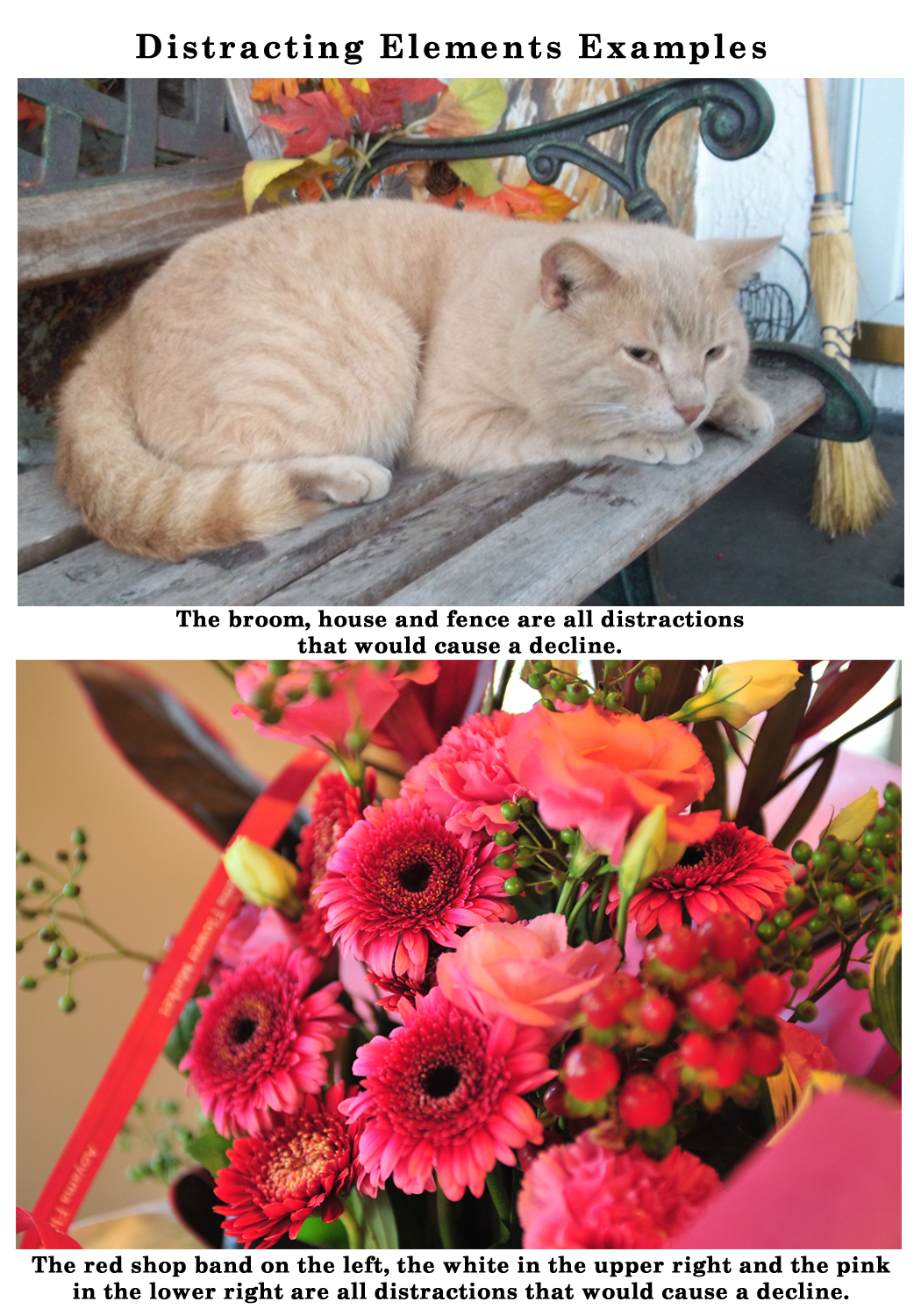
Distracting Elements and/or Background: This really should be fairly easy to understand. It does apply mostly to photographs, though could apply to digital compositions as well. It’s one of those Photography 101 lessons to compose your photograph without things like; poles sticking out of the heads of your subjects, branches and dead leaves in front of your subject, body parts that don’t belong to your subject, etc. Remember; if it does not add to your overall image then it’s a distraction. ANYTHING that draws your eye away from the subject, is a distraction. Fences, buildings, cars, etc. are all considered distractions if found in the background of your image and they are not part of the subject.
More on the subject: Guide to a Winning Photograph
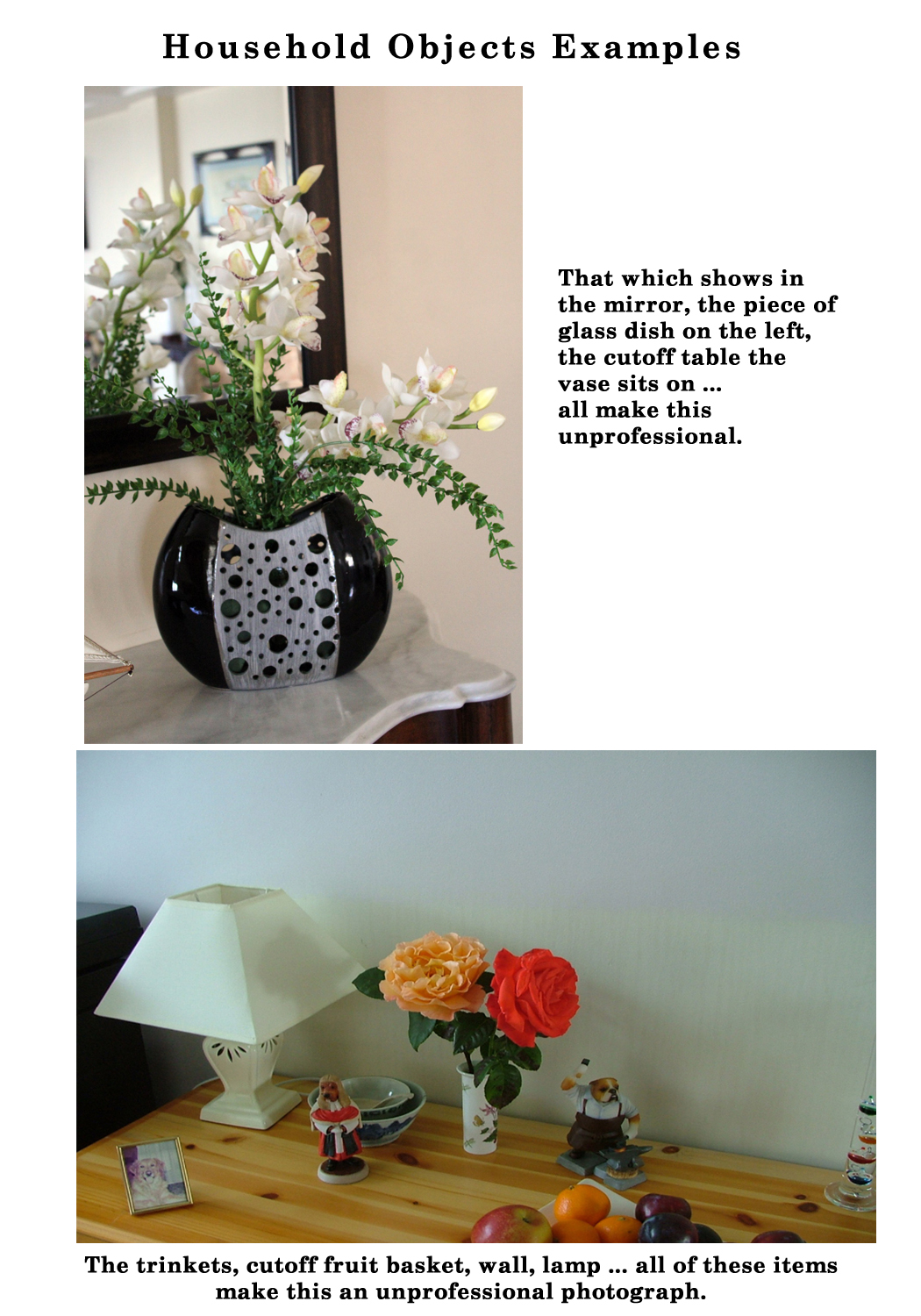
Household Items: There are two issues here, one is that in general, unless of studio quality, photographs of household objects are just not attractive imagery for the greeting card industry. Secondly, there is always the possibility of intellectual property right issues when including wall art, trinkets, collectibles, and fabrics in your photograph. If you wish to photograph a vase of flowers inside a home, you have to remove other household objects in the image, either when composing the image or in post-processing. A good photograph of a dog laying on a simple couch is fine if the image is otherwise top touch. However, a photo of a dog laying on a couch with the leg of a table in the image, a bit of carpet or curtains showing and the dog’s homemade patchwork quilt askew is most likely not going to be considered a marketable image – regardless of whether the dog is cute or grandma made the quilt.
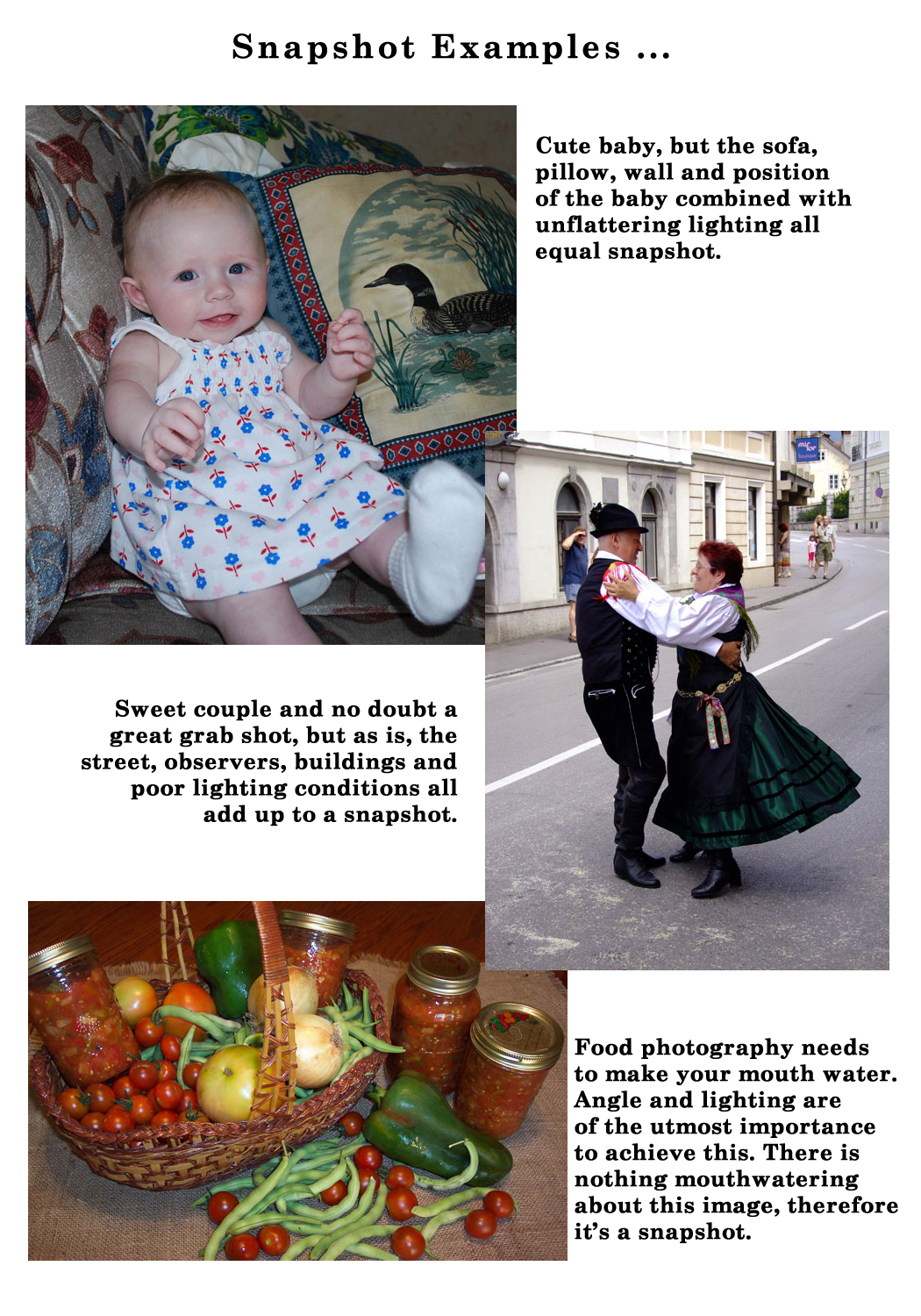
Snapshots: For those of you who having a tough time differentiating between a snapshot and a professional shot, I would encourage you to go browse some place like iStock with a sort on most popular (try babies, pets,or home for examples). You should be able to see the difference. Snapshots of people have unwanted distractions, such as; limbs from other people, household/garden objects, etc. Snapshots have unflattering lighting and people often in unflattering positions or with undesirable expressions. We talked about buildings before – it’s nearly impossible to photograph buildings without the proper training and equipment and expect them to be considered professional in quality. Street scenes and travel photos are rarely acceptable as they almost always have a feeling of an editorial (newspaper) image or vacation snapshot. To have a photograph of food be acceptable for a greeting card, it needs to have amazing lighting and the perfect angle. If the food does not make your mouth water, then it’s a snapshot.
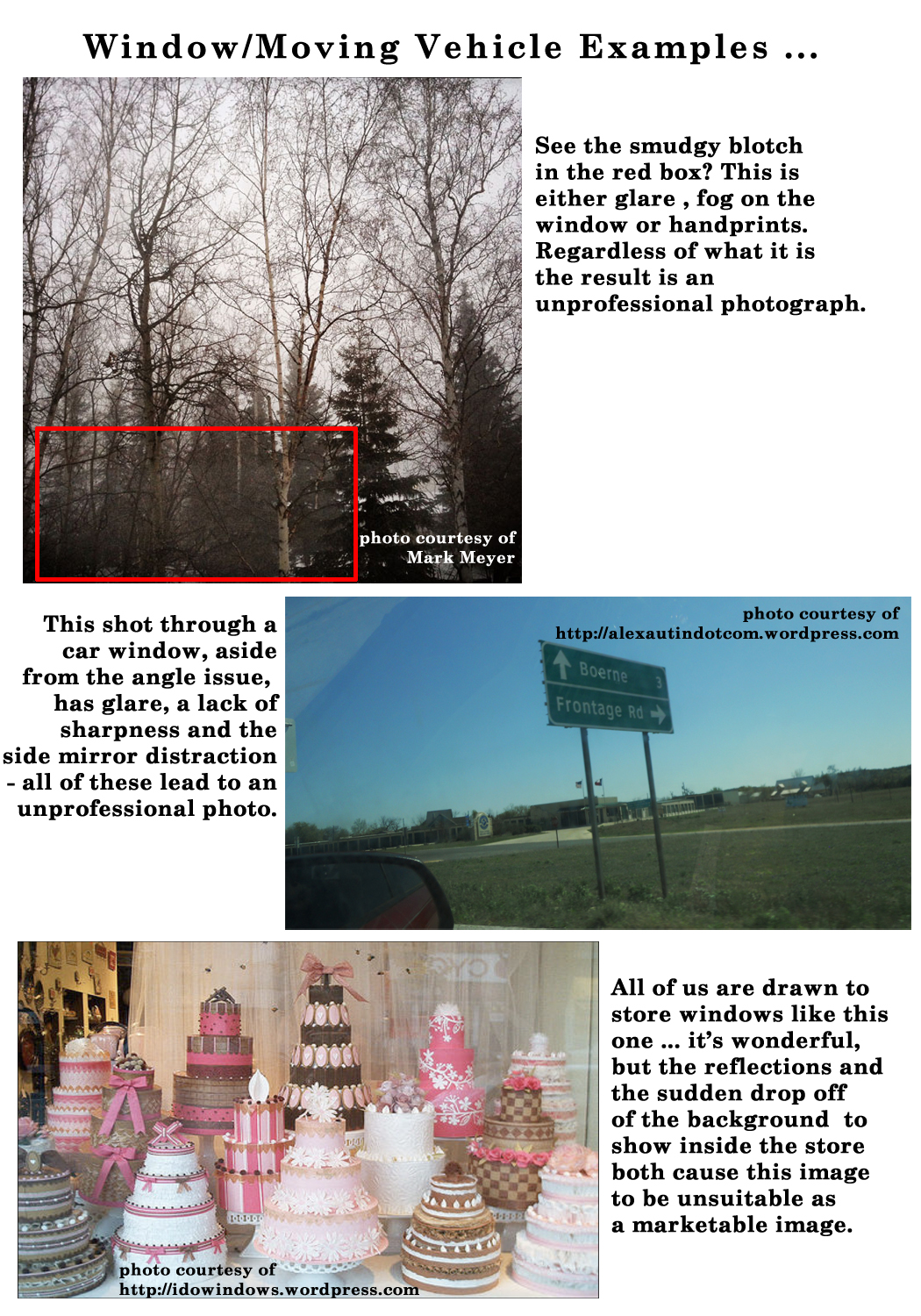
Photos from Windows/Moving Vehicles: You might think, well duh, but you’d be surprised how many people take photos out of a moving vehicle or through a hotel/home window and think it’s a great shot. Moving vehicles cause photographs to have two issues, the reflections in the windshield/window and the added movement of the camera causing camera shake. Not to mention the portions of dashboards and car doors that often end up in the image. Photographing through a window, even from home, will show finger prints, smudges, and water spots in addition to adding blur, reflections and flare. It doesn’t mean there aren’t exceptions to the rule. There will always be a small handful of those rare occasions when everything fell into place for a great shot against all odds. However, these exceptions are accomplished when the photographer applies special techniques to reduce reflections and camera shake.
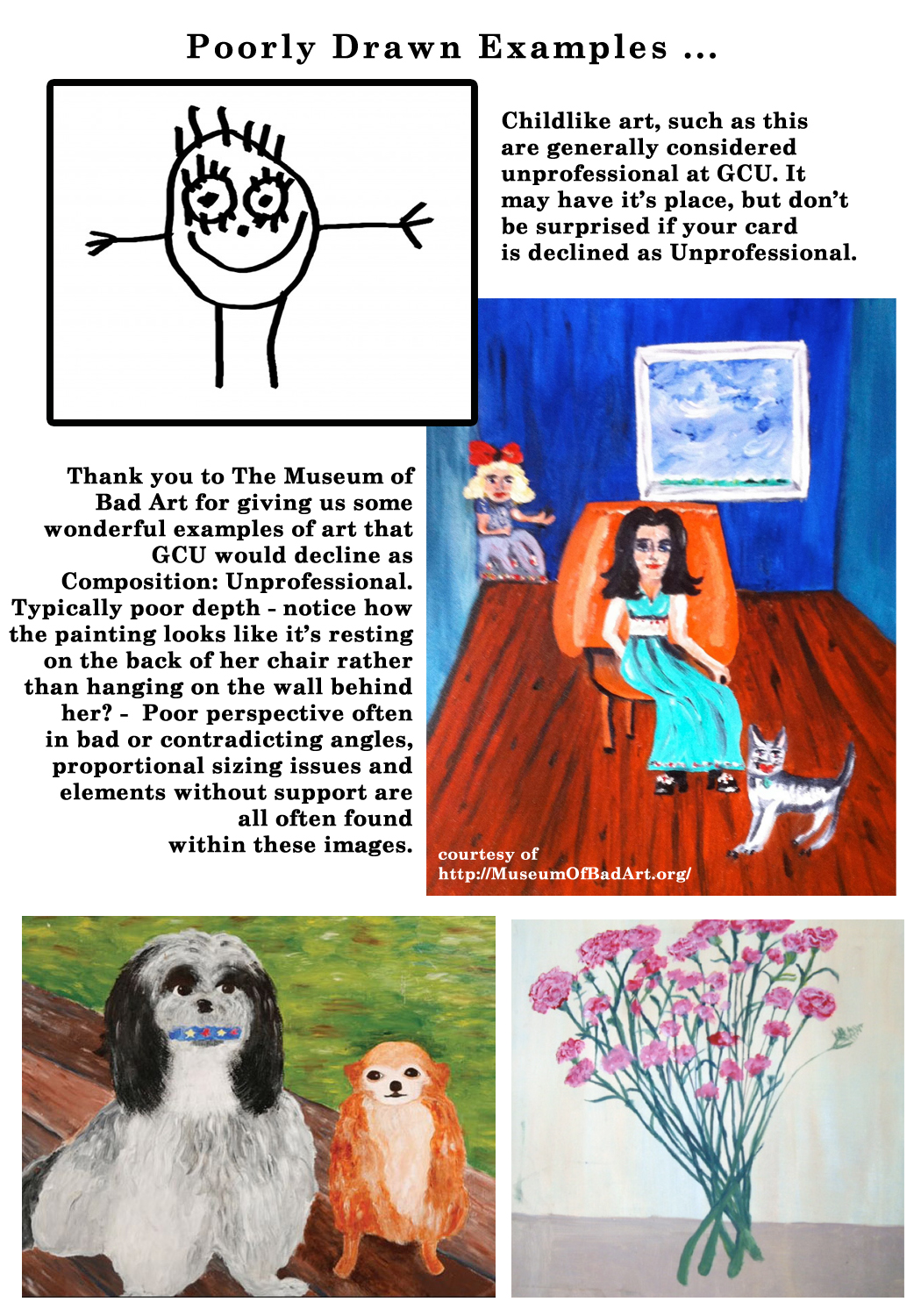
Messy, Distorted, Poorly Drawn Art: Many of you may say that this is very subjective and I suppose to some small degree it is, however it really is easy to see the difference between a drawing/painting of someone who has not developed any real technique compared to the imagery of those artists who work in a trained yet whimsical style. Generally, declines for this area are those which look like a child drew them. They often lack depth, have poor perspective, unsupported elements and/or proportional issues.
I know that calling it Composition: Professionalism gets under your skin, but what difference does it make what it’s called when descriptively, GCU has been so thorough in offering possible reasons for decline? Combined with all of these visuals, you should be able to identify within your imagery the area(s) that caused the decline in this category.
Lacks professional technique, lacking in overall professional quality … call it what you will, this category refers to those designs which simply do not look as though they were created by an artist with a complete understanding of both the technical aspects and quality aspects of their chosen medium. Whether it’s a photograph which looks like a snapshot for the family album rather than a shot created for a greeting card, poor blending after background removal in a digital composition; or messy, distorted, poorly drawn art … the bottom line is, it lacks Professionalism.
Next week we’ll tackle Composition: Placement/Position. Till next week, I hope I’ve inspired you to go look through your store and see if you can weed out any images that the reviewers will find during their weeding which might fit Composition: Professionalism.
For great resources & tips visit the SalonOfArt


