Critique Clinic – September 12-14, 2014

How does it work? For three days a week (Friday-Sunday midnight), I will open the clinic to any artist who wants an honest peer review and critique of a card which gets plenty of clicks but no sales, so something’s probably not quite right, or you’ve got a new design you want to test drive, or you’re unsure about the marketability of a card. Or perhaps you’re a newbie who isn’t sure if a card is up to a marketable standard. Anyone is welcome to participate. In fact, I encourage everyone to at least look at the cards in question and read the critique comments – you may learn something. The purpose of the clinic is to help artists improve the commercial appeal and marketability of their cards.
THE RULES
- ONE card per artist only.
- Card must be intended for sale at Greeting Card Universe.
- To submit a card for critique, post a link to the card at GCU in the comments section of this clinic post. Allowances will be made if you’ve had a card declined, or made a new design you’d like advice on before submission. Give us the link where we can see the card, such as your private gallery, Flickr, Tinypic, etc. If you do give a private gallery link, be sure your private module gallery is ON. Please do not post links to your Manage Cards section – do you really want strangers tinkering with your cards? And please don’t ask us to critique a card that’s pending review – we can’t see it until it’s approved.
- Any artist is free to comment and/or give a critique of a submitted card. HOWEVER, post-and-run comments like “great card” or “you suck” will not be tolerated, nor will abuse. Criticism should be constructive, not destructive. Play nice or you will be banned.
- I also won’t tolerate temper tantrums if you decide your “artistic integrity” is being stepped on because you asked for a critique, and someone told you the photo you’re using isn’t in focus. If you can’t take honest criticism, don’t submit. Once gets you a warning; twice and you’re banned from submitting in the future.
- Artists who critique may do so by giving their opinion, posting an example of another card, or pointing the submitter to a video, on-line article, or other helpful suggestion.
- Don’t forget that artists who are giving you tips and helpful advice are volunteering their time and trouble. Be nice. A link back to their store on your website or blog is appreciated (but not mandatory).
- You are free not to take any advice offered. There’s no guarantee any card will be a bestseller, so don’t come into the clinic with unrealistic expectations.
- Rules may change as we go along and we see how things turn out, okay?
So without any further ado, I declare this week’s Critique Clinic open!
Share this:

Dash of Inspiration: TOU – Terms of Use
A Dash of Inspiration, A Cup of Creativity by Doreen
TOU – Terms of Use

(Reposting this very helpful guide for artists who use free or purchased graphics)
Let me begin this week’s discussion about Commercial Use elements and their associated licenses by stating very clearly; “I am no expert”! What I offer here today is from knowledge acquired during my own research over the past few years of reading and respecting the terms given by the creator for each element I wish to use. With this information base I can get you on the road to better understanding what to look for and some of the associated terms you’ll find out there.
Here are some definitions to learn and look for as you begin to explore and understand the ‘fine line’ of using photographs and elements created by other artists:
CU = Commercial Use – what this means is that you are allowed to use the image/element in brochures, advertising, blogs, websites, business cards, and so on, but the contributor will often stipulate that you MAY NOT use it for financial gain. Often when you read what CU means to that creator they will say there are ‘no limitations’ or ‘free to use in your designs’ which means they are giving the okay for CU4CU.
CU4CU = Commercial Use for Commercial Use – you’ll see this sometimes, more on graphics than photographs. This is what we designers at GCU do. We create CU designs to sell in the Commercial Marketplace.
Note: It’s important to understand that just because something says CU (Commercial Use) that does not necessarily means it’s okay for using in something you plan to resell, like our greeting cards. Even photographs and art which have been ‘Released to Public Domain’, by law effectively fall into a Creative Commons license of some kind. Places like Morguefile for example exist for us designers, however these images fall into the Creative Commons law, so it’s important to not only respect the Morguefile TOU, but also look carefully for any additional terms the contributor places on their images.
Adaptation, Derivative Work & Remix – all mean the same thing: Any work created by the editing, modification, adaptation or translation of the work in any media. Using as a reference to paint is a derivative work. Using it as one element of several in a new design is a derivative work. Using the element in a collage, is a derivative work.
Attribution – means acknowledging all the parties who have contributed to and have rights in the ‘new’ work.
Attribution CC License – This license lets others distribute, remix, tweak, and build upon your work, even commercially, as long as they credit you for the original creation. Here is a link to the Creative Commons Attribution License Terms.
Here is a link to see the definitions for all types of Creative Commons Licenses:
Creative Commons (CC) Specifics:
Ownership — You may not claim ownership of this image in its original state. If you do not credit the originator of the work and put your name as the creator, then you are effectively claiming ownership.
Stand alone basis — You can not sell, license, sub-license, rent, transfer or distribute this image exactly as it is without alteration.
Without Attribution — to use without attributing the original author.
NOTE: Two things; 1) Though Morguefile states in their TOU that attribution is not necessary; be careful – many of the contributors do require in their image notes that you credit them. 2) I personally do not recommend waiving attribution when the element/photograph is recognizable in whole or in part in the new design. People change their mind, families inherit image rights and change the license; if you want to protect yourself and your creation, then always credit the originator of the elements/photographs you use and do so tastefully on the image itself so those credits stay with the image.
Here is more on that if you missed it: Credit Where Credit is Due
Hopefully I’ve opened the door to this complex world and you will feel more comfortable stepping through and learning more so you can create unique new works! To see some gorgeous examples of derivative works using various elements from resources explore deviantART.com here.
Editor’s Note: On purchased graphics like vectors and clip art, look for an Extended License, which usually allows the graphic to be used on merchandise for sale.

“Crying an Ocean” Image by Print-of-Hooves at DeviantART – notice the artist’s notes on the photos used to create this new work
Share this:

Design Spotlight: Bruce Bolinger

Our Design Spotlight falls today on Bruce Bolinger of Lucid Moment, a very successful and talented artist who joined GCU in October 2013. We love his humor!
_________________________

I suppose my first paying professional job was far back in high school, designs for a man who built travel campers. Decades have passed and I find myself still creating, still loving every minute of the experience and hoping I can finish my last sketch at the 100 year mark. I’ve done a huge variety of artwork over the years from cartoons to oil paintings, from charts and graphs to t-shirts, and from illustrations to photography.
Midway through my freelance career I decided to concentrate on sliding from illustration into cartooning. My wife and I had run a freelance artwork supply proprietorship to book publishers for about 15 years and decided to make that change. The transition took time but I eventually landed in the fantastic position of being “inker” for the late and great cartoonist Don Martin. At that time Don had switched from Mad Magazine to Cracked Magazine, Mad’s rival for 40 years and Don was looking for an assistant. I was privileged to work with many of the writers and cartoonists that were originally with Mad but moved to Cracked for various reasons. An “inker” is the artist that transforms the tight pencil roughs of the originator into the final inked version that goes to publication.
I finished Don’s works for three years and moved on to work for the magazine as writer and cartoonist for 12 years, almost up until its closure. Since the demise of the magazine I have freelanced for numerous companies and have cartoons in as many places as will have me. I have done cards for Recycled, The Paper House, Off The Wall, etc. I have cartoons on line at a couple websites that supply cartoons to books, magazines and newspapers. I came to Greeting Card Universe several months back following the advice of a fellow cartoonist who recommended the community as one that supported creative efforts. I’ve found that to be true and hope the relationship will last.
I’ve been one of the fortunate ones that has freelanced from home since the 70’s. My daily commute consists of one flight of stairs, pausing at the coffee machine and sitting in the studio, sometimes in my underwear, sometimes in someone else’s.
Currently my process combines old-school art and computer finishes. I still work at the drawing board creating black and white line cartoon art on illustration board. The cartoon work is scanned in, type and color added, then transmitted to GCU. I work in that method because I can create true cartoon originals, one-of-a-kind, hold-in-your-hand artwork that usually winds up framed, many times covering a hole in someone’s man cave. I still hold to the school of thought that originals exist outside the computer and the experience of creating artwork in that manner should be at least experienced by each and every artist. The feel and feedback of hand-to-canvas is being lost.
The original black and white cartoons I create are also sold online on Ebay and provide a great secondary market. I’ve even developed a collector following that surprises me.
My cards on GCU are the current incarnations of many of my past cartoons. I always try to create “timeless” material that remains humorous for a lifetime. Humor is my way to deliver verse in all the GCU categories. I strive for tying the verse somehow to the cartoon scene or text on the cover and delivering a card that makes someone smile. Humor is universal and apparently because of my exposure on Greeting Card Universe someone spotted my efforts and has offered syndication of my cartoons in, of all places, Sweden.
It’s ironic but the man I worked for in the early 90’s, Don Martin, was the most popular cartoonist in Sweden in those years. Now I have just signed a 3-year contract and if I can keep the Swedes smiling they promise to send me money and maybe a discount on their IKEA furniture …
That’s hard to beat.
Share this:

Dash of Inspiration: Typography Terms
A Dash of Inspiration, A Cup of Creativity by Doreen
 Typography Terms
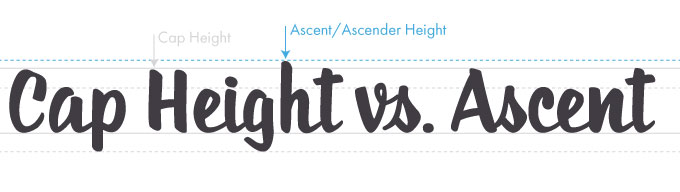
Last week, I ran across this great reference tool of Typography Terms and found it so useful, I wanted to pass it on in the hopes some of you might also find it handy. The visual examples and short, sweet definitions make it so much easier to remember how each of these terms apply when I’m designing.
10 Typography Terms Every Designer Should Know
If you are new to greeting Card Design at GCU, or an old pro who wants a little fresher now and then, be sure to bookmark the GCU Community Blog for all our Typography tips:.
Since we’re on the subject, here are a few font specials going on right now you might like to take advantage of:
The Wallington Typeface by Zeune Ink Foundry
Heroe Std by Lián Types
Mr Chalk by Thinkdust
Don’t forget, if you’re looking for great fonts, our blog posts over the past few years are filled with wonderful font choices and many of them are free.
So until next week … Learn … Create … Inspire!
Share this:

Critique Clinic – September 5-7, 2014
How does it work? For three days a week (Friday-Sunday midnight), I will open the clinic to any artist who wants an honest peer review and critique of a card which gets plenty of clicks but no sales, so something’s probably not quite right, or you’ve got a new design you want to test drive, or you’re unsure about the marketability of a card. Or perhaps you’re a newbie who isn’t sure if a card is up to a marketable standard. Anyone is welcome to participate. In fact, I encourage everyone to at least look at the cards in question and read the critique comments – you may learn something. The purpose of the clinic is to help artists improve the commercial appeal and marketability of their cards.
THE RULES
- ONE card per artist only.
- Card must be intended for sale at Greeting Card Universe.
- To submit a card for critique, post a link to the card at GCU in the comments section of this clinic post. Allowances will be made if you’ve had a card declined, or made a new design you’d like advice on before submission. Give us the link where we can see the card, such as your private gallery, Flickr, Tinypic, etc. If you do give a private gallery link, be sure your private module gallery is ON. Please do not post links to your Manage Cards section – do you really want strangers tinkering with your cards? And please don’t ask us to critique a card that’s pending review – we can’t see it until it’s approved.
- Any artist is free to comment and/or give a critique of a submitted card. HOWEVER, post-and-run comments like “great card” or “you suck” will not be tolerated, nor will abuse. Criticism should be constructive, not destructive. Play nice or you will be banned.
- I also won’t tolerate temper tantrums if you decide your “artistic integrity” is being stepped on because you asked for a critique, and someone told you the photo you’re using isn’t in focus. If you can’t take honest criticism, don’t submit. Once gets you a warning; twice and you’re banned from submitting in the future.
- Artists who critique may do so by giving their opinion, posting an example of another card, or pointing the submitter to a video, on-line article, or other helpful suggestion.
- Don’t forget that artists who are giving you tips and helpful advice are volunteering their time and trouble. Be nice. A link back to their store on your website or blog is appreciated (but not mandatory).
- You are free not to take any advice offered. There’s no guarantee any card will be a bestseller, so don’t come into the clinic with unrealistic expectations.
- Rules may change as we go along and we see how things turn out, okay?
So without any further ado, I declare this week’s Critique Clinic open!
Share this:

Wanted: New Cards Round-Up for August 2014

In the GCU Forum, you’ll find a sub-category titled Wanted: New Cards. Why should you be watching this category like a hawk? Read this Tips and Tricks – Wanted: New Cards article to find out how to beef up your store without breaking a sweat! In a nutshell, you can Fast Track these requests AND use Bigstock photographs, making the process a snap.
You can Fast Track cards up to a week after the request has been made. After that, it’s business as usual. We’ll note which requests in the list are still eligible. Even if the requesting shopper has already purchased a card, consider making a card for the category anyway since the need is out there.
Have fun designing and happy selling!
If you missed out on the August 2014 requests, here are the New Categories needing cards:
21st Birthday for Great-Granddaughter
***Can Fast Track until September 9**
Birthday >> For Family Relation Specific >> Great Granddaughter >> Age Specific
Moving to a Nursing Home (Encouragement and Congratulations)
**Sensitive topic – do research and handle with care**
Occasions >> Congratulations >> New Home >> Nursing Home / Assisted Living
Year of the Horse – New Baby Congratulations
Occasions >> Congratulations >> New Baby >> Horse Baby / Year of the Horse Baby
40th Birthday for Twin Brother
Birthdays >> For Family Relation Specific >> My Twin >> Twin Brother >> Age Specific
Customizable Photo Cards go in second category – Collections >> Photo Cards / Your Picture Here >> Birthday
Back to School For Teacher
Occasion >> School Days >> Back to School >> For Teacher
Congratulations on Getting Published
Occasions >> Congratulations >> Getting Published
Thank You – Retirement Party
Occasions >> Thank You >> Host / Hostess >> Retirement Party
1st Birthday for Grandson
Birthdays >> For Family Relation Specific >> Grandson >> Age Specific
Canadian Boot Camp Graduation Congratulations
***Please Note: the national flag of Canada cannot be used in commercial designs**
Occasions >> Congratulations >> Graduation >> Trade / Vocational / Career School >> Military >> Boot Camp – Canada
Congratulations – First Chemotherapy
Occasion >> Congratulations >> Cancer Survivor / Treatment >> 1st Chemo
97th Birthday for Neighbor (masculine)
Birthdays >> For Neighbor >> Age Specific
Congratulations – PsyD Degree
Occasions >> Congratulations >> Graduation >> Grad / Graduate School >> Doctor of Psychology / PsyD
Motorcycle Accident – Get Well
Occasion >> Get Well / Feel Better >> Motorcycle Accident
Happy Birthday for Church Secretary
Birthdays >> Occupation Specific >> Church Secretary
Will You Be My Witness (Wedding)
Invitations >> Wedding Attendants / Bridal Party >> Will you be my Witness?
Occasions >> Thank You >> Wedding Attendants / Bridal Party >> Witness
Feast of St. Nicholas/Sinterklaas
Holidays >> St. Nicholas Day / Feast of Saint Nicholas / Sinterklaas
Remembrance of Mum on Anniversary
Occasions >> Anniversary – Death / Remembrance >> Loss of Mom / Mother >> Loss of Mum
Father in Law Day
Holiday >> Father in law Day
Share this:

Dash of Inspiration: Capitalization
A Dash of Inspiration, A Cup of Creativity by Doreen
Capitalization
It seems with everyone ‘texting’ these days that simple punctuation rules, which have been dropped to speed up text messaging, have sadly become ‘the norm’ in the English language. However, in the professional arena such as ours, we are creating and submitting to a public marketplace, and dropping these courtesies to the English language lacks the professionalism many customers expect to see when choosing a product.
Today, we are not speaking about writing greeting card verse. Writers of verse and poetry often break these rules in an effort to emphasize their message. This is often allowed at GCU as long as it comes across as an obvious means to express creativity, or even improve the visual aspect of the inside verse. If, however, you simply get lazy and write ‘merry christmas’ instead of “Merry Christmas,” your card is likely to be returned. On the other hand, if you write, “Tis the Season to be Merry,” your card will likely be accepted.
It’s up to you to put on a professional front everywhere else, like in these areas:
- Image by Credits – Where your name/business name appears under each thumbnail image, on the back of every card you sell and in the ‘Sell This Card’ 3D link every time someone promotes your card. Why do some of you ignore proper case-sensitive lettering when you type your own name?
- Card Titles – The first thing potential customers/promoters see along with your image, the ‘attention grabber’ you might say, yet some of you don’t bother even using ‘Christmas’ instead of ‘christmas’.
- Artist Notes (Description) – Please don’t write this description of your card as if you were texting a friend. The improper use of capitalization and abbreviations is unprofessional.
Examples of Capitalization Rules:
- Capitalize the first letter of a new sentence and/or new document.
- Titles of books, magazines, movies, art works, etc.
- Capitalize proper nouns and adjectives derived from proper nouns.
- Capitalize relationship-specific such as Grandmother, Father, etc. when they are used in place of the person’s name.
- Capitalize specific geographic locations such as; California, Scotland, Sacramento’s Downtown District, etc.
- Do not capitalize ‘the’ used in front of proper nouns, unless it’s part of the proper noun’s title, such as; The Amazing Spider-Man which is a movie title, therefore ‘The’ is part of the title and should be capitalized. It remains lower case however, if I were to write; “I own the complete set of the Spider-Man movies.”
Here are some great reference guides to see more rules on the subject:
Capitalization Guide from Grammarly.com
When Should You Capitalize Words?
Put on a professional front. Dot your ‘i’s and cross your ‘t’s and use proper capitalization in your Card Titles, Image Source and Artist Notes to grab customer’s attention. So until next week … Learn … Create … Inspire!

Share this:

Tips and Tricks: Comic Sans


Today, we’re talking about one of the most maligned fonts out there … Comic Sans. Why is this font so despised? Short answer, because it’s been overused and abused for too long and there are many more fonts out there that have more style. If you want the long answer, check out the history of Comic Sans.
Comic Sans is one of the fonts offered at GCU, probably because it’s inoffensive and commonplace. However, for your front of card designs, the last font you should be using is Comic Sans. There are many other sans serif type fonts, many free for commercial use, that are better. However, if you choose to use Comic Sans – while a poor design choice – it’s your decision to make.
Recently, an artist received a Decline on a card. The font used on the front was Comic Sans. This has created some question as to whether GCU Reviewers are now commonly rejecting cards using Comic Sans and even some artists have expressed fear that older cards using Comic Sans will now be Returned for Edits or deleted from stores.
Don’t panic.
GCU has no official standing against Comic Sans in the Submission Guidelines.
We’ve spoken to Mindy (a GCU Administrator) who assures us there is no policy against Comic Sans and Reviewers are not routinely rejecting cards using this font. Just be certain any card designs you create are marketable and appealing.
If you’d like to have alternatives to Comic Sans, here are a bunch of commercial free Sans Serif fonts you can download and add to you designer’s toolbox.
Share this:


Happy Labor Day!
We hope everyone enjoys the holiday. We’ll see you tomorrow with our regular posting. 🙂
Share this:

Critique Clinic – August 29-31, 2014
How does it work? For three days a week (Friday-Sunday midnight), I will open the clinic to any artist who wants an honest peer review and critique of a card which gets plenty of clicks but no sales, so something’s probably not quite right, or you’ve got a new design you want to test drive, or you’re unsure about the marketability of a card. Or perhaps you’re a newbie who isn’t sure if a card is up to a marketable standard. Anyone is welcome to participate. In fact, I encourage everyone to at least look at the cards in question and read the critique comments – you may learn something. The purpose of the clinic is to help artists improve the commercial appeal and marketability of their cards.
THE RULES
- ONE card per artist only.
- Card must be intended for sale at Greeting Card Universe.
- To submit a card for critique, post a link to the card at GCU in the comments section of this clinic post. Allowances will be made if you’ve had a card declined, or made a new design you’d like advice on before submission. Give us the link where we can see the card, such as your private gallery, Flickr, Tinypic, etc. If you do give a private gallery link, be sure your private module gallery is ON. Please do not post links to your Manage Cards section – do you really want strangers tinkering with your cards? And please don’t ask us to critique a card that’s pending review – we can’t see it until it’s approved.
- Any artist is free to comment and/or give a critique of a submitted card. HOWEVER, post-and-run comments like “great card” or “you suck” will not be tolerated, nor will abuse. Criticism should be constructive, not destructive. Play nice or you will be banned.
- I also won’t tolerate temper tantrums if you decide your “artistic integrity” is being stepped on because you asked for a critique, and someone told you the photo you’re using isn’t in focus. If you can’t take honest criticism, don’t submit. Once gets you a warning; twice and you’re banned from submitting in the future.
- Artists who critique may do so by giving their opinion, posting an example of another card, or pointing the submitter to a video, on-line article, or other helpful suggestion.
- Don’t forget that artists who are giving you tips and helpful advice are volunteering their time and trouble. Be nice. A link back to their store on your website or blog is appreciated (but not mandatory).
- You are free not to take any advice offered. There’s no guarantee any card will be a bestseller, so don’t come into the clinic with unrealistic expectations.
- Rules may change as we go along and we see how things turn out, okay?
So without any further ado, I declare this week’s Critique Clinic open!


