Critique Clinic – November 1-3, 2013

How does it work? For three days a week (Friday-Sunday midnight), I will open the clinic to any artist who wants an honest peer review and critique of a card which gets plenty of clicks but no sales, so something’s probably not quite right, or you’ve got a new design you want to test drive, or you’re unsure about the marketability of a card. Or perhaps you’re a newbie who isn’t sure if a card is up to a marketable standard. Anyone is welcome to participate. In fact, I encourage everyone to at least look at the cards in question and read the critique comments – you may learn something. The purpose of the clinic is to help artists improve the commercial appeal and marketability of their cards.
THE RULES
- ONE card per artist only.
- Card must be intended for sale at Greeting Card Universe.
- To submit a card for critique, post a link to the card at GCU in the comments section of this clinic post. Allowances will be made if you’ve had a card declined, or made a new design you’d like advice on before submission. Give us the link where we can see the card, such as your private gallery, Flickr, Tinypic, etc. If you do give a private gallery link, be sure your private module gallery is ON. Please do not post links to your Manage Cards section – do you really want strangers tinkering with your cards? And please don’t ask us to critique a card that’s pending review – we can’t see it until it’s approved.
- Any artist is free to comment and/or give a critique of a submitted card. HOWEVER, post-and-run comments like “great card” or “you suck” will not be tolerated, nor will abuse. Criticism should be constructive, not destructive. Play nice or you will be banned.
- I also won’t tolerate temper tantrums if you decide your “artistic integrity” is being stepped on because you asked for a critique, and someone told you the photo you’re using isn’t in focus. If you can’t take honest criticism, don’t submit. Once gets you a warning; twice and you’re banned from submitting in the future.
- Artists who critique may do so by giving their opinion, posting an example of another card, or pointing the submitter to a video, on-line article, or other helpful suggestion.
- Don’t forget that artists who are giving you tips and helpful advice are volunteering their time and trouble. Be nice. A link back to their store on your website or blog is appreciated (but not mandatory).
- You are free not to take any advice offered. There’s no guarantee any card will be a bestseller, so don’t come into the clinic with unrealistic expectations.
- Rules may change as we go along and we see how things turn out, okay?
So without any further ado, I declare this week’s Critique Clinic open!
Share this:

Design Contest: Be Thankful


Let’s do a fun Thanksgiving Day contest!
In the comments section of this post, give us a link to your best Thanksgiving card at GCU (card must be available for sale) and mention what you’re grateful for this year.
Deadline for entering the contest is November 6, 2013. On November 7, I will post the entries and voting will open. The artist who receives the most votes will win $10 Amazon.com gift certificate or 5 free card credits. AND for a holiday treat, we’ll do a random drawing of all artists who submit an “I’m thankful for” comment and the winner will receive a reward too!
That’s double the prizes, double the chances of winning, double the opportunity!
Don’t delay, enter your very best design today!
Share this:

Rainbow Connection: 9 Color Palettes From Designers

Here’s an interesting Better Homes & Garden article which includes 9 luscious color palettes that will surely spark your imagination. Of course, these are interior designers we’re talking about, but color is color and wow, some of these colors sure do pop. You’ll see a sample below.
Yes, after the second color palette, you get a pop-up asking you to buy a subscription There’s a Continue to Your Destination button in the upper right. Click to skip the ad and move along.
For card design, you can always lighten or darken a hue, do a tone-on-tone patterned background, and have lots of fun.

Share this:

Tips and Tricks: Creating Ribbon Banners

Creating Ribbon Banners

Ribbon banners like the one you see in the card example above (“Do Not Wait”) remain popular design elements. You can buy or sometimes download free CU4CU brushes or vector sets with these elements, but you could also learn to do it yourself. Here are links to some helpful tutorials that we hope will inspire and help you in your design work.
We haven’t found tutorials for PSP or Gimp. If anybody has a link, please let us know in the comments. Thanks! And everybody else, have fun.
Cheat at Photoshop: Drawing Ribbons (video)
How to Make a Simple Banner/Ribbon in Photoshop (video)
Creating a Banner in Photoshop
10 Great Ribbon Tutorials in Photoshop
How to Make a Straight Ribbon Banner in Illustrator (video)
Ribbon/Banner Effect in Corel Draw
Creating Basic Shapes in Corel Draw (video)
How to Draw a Banner in Six Simple Steps (old school, baby!)
Share this:

Dash of Inspiration: Trick or Treat!
A Dash of Inspiration, A Cup of Creativity by Doreen
Trick or Treat

Halloween starts the holiday season off with such inspiration for the card designer. Costumes, decorations, colorful leaves every where we look. So, though it’s too late to get new Halloween cards in the marketplace for this year’s sales, don’t let the enthusiasm you have for the holiday pass. Put being surrounded by Halloween décor as inspiration for getting a head start on your Halloween cards for next year!
There are sales and freebies on for Halloween goodies at all our favorite resources … maybe there is something that inspires you to start your 2014 Halloween designs!
Scraps and the City – 40% to 75% off sale – Look through the CU section of their Halloween selection.
CU Halloween Bows and Ribbons – Here’s a freebie for you:
Cool Scraps Digital Boutique: 25%-50% off CU Halloween kits
90 Halloween Papers 50% off from CU4CU.com
6 Commercial Use FREE Halloween Fonts – Get all these fonts at Font Squirrel for free and all of them are safe to use on your commercial greeting card designs!

Enjoy these links to Halloween goodies and design while the season inspires you!
So, until next week … Learn … Create … Inspire!
Share this:

Critique Clinic – October 25-27, 2013
How does it work? For three days a week (Friday-Sunday midnight), I will open the clinic to any artist who wants an honest peer review and critique of a card which gets plenty of clicks but no sales, so something’s probably not quite right, or you’ve got a new design you want to test drive, or you’re unsure about the marketability of a card. Or perhaps you’re a newbie who isn’t sure if a card is up to a marketable standard. Anyone is welcome to participate. In fact, I encourage everyone to at least look at the cards in question and read the critique comments – you may learn something. The purpose of the clinic is to help artists improve the commercial appeal and marketability of their cards.
THE RULES
- ONE card per artist only.
- Card must be intended for sale at Greeting Card Universe.
- To submit a card for critique, post a link to the card at GCU in the comments section of this clinic post. Allowances will be made if you’ve had a card declined, or made a new design you’d like advice on before submission. Give us the link where we can see the card, such as your private gallery, Flickr, Tinypic, etc. If you do give a private gallery link, be sure your private module gallery is ON. Please do not post links to your Manage Cards section – do you really want strangers tinkering with your cards? And please don’t ask us to critique a card that’s pending review – we can’t see it until it’s approved.
- Any artist is free to comment and/or give a critique of a submitted card. HOWEVER, post-and-run comments like “great card” or “you suck” will not be tolerated, nor will abuse. Criticism should be constructive, not destructive. Play nice or you will be banned.
- I also won’t tolerate temper tantrums if you decide your “artistic integrity” is being stepped on because you asked for a critique, and someone told you the photo you’re using isn’t in focus. If you can’t take honest criticism, don’t submit. Once gets you a warning; twice and you’re banned from submitting in the future.
- Artists who critique may do so by giving their opinion, posting an example of another card, or pointing the submitter to a video, on-line article, or other helpful suggestion.
- Don’t forget that artists who are giving you tips and helpful advice are volunteering their time and trouble. Be nice. A link back to their store on your website or blog is appreciated (but not mandatory).
- You are free not to take any advice offered. There’s no guarantee any card will be a bestseller, so don’t come into the clinic with unrealistic expectations.
- Rules may change as we go along and we see how things turn out, okay?
So without any further ado, I declare this week’s Critique Clinic open!
Share this:

Font Frenzy: Fine Art On Sale!

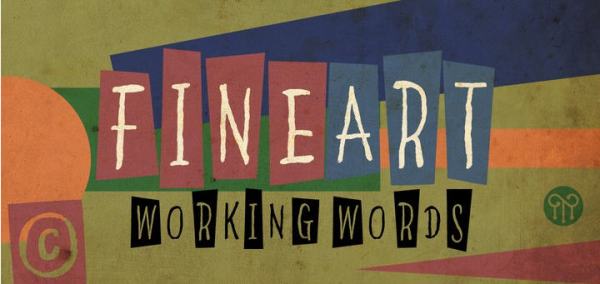
Fine Art is a nice casual font with a playful feature — the caps are in a solid block of color in contrast to the non-capital letters. You’ll see an example below. This gives great opportunity to be really creative with your colors when designing cards for children, for example. Currently, the font is only $5, so get it while it’s on sale!
Share this:

Nuts and Bolts: Dealing with Cards On Hold

DEALING WITH CARDS ON HOLD
The average review time is 6-8 weeks at the time of this writing. Unfortunately, when a submitted card is placed On Hold by the reviewer, it adds more time to the wait. We hope you’ll find some answers here as well as some tips to help you avoid further delays.
Why Are Cards Put On Hold?
A submitted card is typically put On Hold because the original reviewer needs a second opinion from another reviewer or from GCU Admin on whether the design meets the Submission Guidelines. There may be other reasons that come into play, but that’s the main one.
What Happens After a Card is Put On Hold?
Either the card will be Approved following review or it will be Returned for Edits or Declined. If the card is Returned for Edits, proceed as normal.
What Can I Do If My Card is Placed On Hold?
Wait until you hear from the reviewer. Have patience. If you haven’t gotten notice of a change in the status of your card after a reasonable amount of time has passed (a reasonable amount being closer to a few weeks rather than a few days), contact the review team. Follow these steps and do not skip any:
- To send an e-mail, reply to the e-mail notification you originally received.
- Include the card’s PID# in the subject line—very important!
- In the body of the e-mail, include how long you’ve waited for the On Hold card to be released (it’s helpful to include a date when you received the notice).
- Please don’t harass the reviewers every other day with messages. If they have to keep replying to your e-mails, they won’t have time to actually review cards.
- Please exercise patience and use restraint. We know you’re frustrated. Be cool.
- If all else fails, post a message on the Forum. Include the PID# of the card. This should be a last resort. And do not hijack someone else’s thread by tacking a “me too” on a reply to their post—there’s a good chance your post won’t be seen by anyone who can help.
How Do I Know If a Card is Placed On Hold?
You should receive a notice from the review team. If not, see below for how to check card status in your Manage Cards section.
How Can I Find a Card That’s Been Put On Hold?
When you’re logged in to GCU, go to Manage Store >> Images & Cards >> Manage Cards. You can do a search by card status (Pending-Held is the one you want in this case).
Do Not Edit Cards Placed On Hold
Do not edit the images of cards On Hold. When you make changes to a card under review, you are wasting your time and the reviewer’s time because the delay will be even longer as the confusion is sorted out. Besides, wouldn’t you feel foolish if the original card was okay, but your edit had problems and was declined or Returned for Edits? If a card is Returned for Edits, that’s a different story.
How Do I Avoid Having Cards Put On Hold?
Reading, understanding, and applying the Submission Guidelines would be an excellent start. If you’re submitting a series of cards, get pre-approval for the first one (see Pre-Approval For Card Series with Fast Track for everything you need to know) to save time and effort.
In the meantime, if you have cards On Hold, use the time to create fresh new designs for your store, learn more about GCU’s Submission Guidelines, or check this Community blog for loads of helpful information on many topics of interest to artists.
Share this:

Tips and Tricks: Creating Patterns
Creating Patterns

Some artists prefer to use plain colored backgrounds for their card designs, which is fine. Others enjoy pairing patterned backgrounds with graphics to create more visual interest. There are a lot of pre-set patterns available on-line, but not all are OK for commercial use.
Instead of adapting someone else’s work, why not make your own patterned backgrounds? Classic repeating patterns like stripes, polka dots, chevrons, etc. will almost always be useful in many different designs. In the card example above, we created a knitted texture for the background.
Here are links to tutorials that will help you create your own patterns for use in graphics editing software. Have fun!
How to Create Custom Patterns in Photoshop
Creating Patterns in Photoshop CS2
Create a New Pattern in Photoshop Elements
Illustrator Help: Seamless Pattern Creation (video)
How to Make Custom Patterns in Gimp (video)
Creating Backgrounds, Textures and Patterns in Paint Shop Pro
How to Install Paint Shop Pro Patterns, Brushes, Etc.
Share this:

Dash of Inspiration: Tips for Newbies
A Dash of Inspiration, A Cup of Creativity by Doreen
Tips For Newbies
We continuously have wonderful new artists join our GCU community, so I thought I’d put together a little ‘tip’ sheet with many of the helpful links found in the community blog and in the wiki. If you as a new artist will take the time to soak in all the wonderful information GCU provides on how to submit cards that will fly through the review cycle, not only will you be saving the reviewer’s time, you’ll be saving yourself the frustration of returns and be well on your way to earning Star Submitter status.
READ the Submission Guidelines!
Search the Community Blog for the submission guideline area, such as; Composition, Typography for extensive examples of what GCU accepts and declines – AND, subscribe to the blog to be notified of more great tips, freebies, inspiration and more!:
Sign up to receive all the posts on the Forum where important announcements are made, but that’s also a great place to get to know your fellow artists, ask questions and learn.
Keep Card Submissions 101 at your finger tips. Using this document as a check list for your submissions will save you and the review team time and frustration.
Triple check your Grammar and Spelling and take a peek at the GCU link to common mistakes:
Print Margin Tool – understand the bleed area and learn to design and check your margins.
Understand how the Review Process works
Note to Reviewer field – learn how to use this field to communicate with the review team. Read:
Dash of Inspiration: Note to Reviewer
Nuts & Bolts: Note to Reviewer
READ, READ, READ about Category Choices – it’s not easy to learn, but there is logic you can apply to make sense of it all … so study these links each time you make a card and soon you’ll be an expert!
The Card Submissions 101 pdf above has detailed information worth reading.
Also Dash of Inspiration: Choosing Categories
Welcome newbies, we are here to help!
So, until next week … Learn … Create … Inspire!


