We Have a Winner!
DESIGN CONTEST – BEST OF THE BEST
The winner of our first Design Contest (by random drawing) is…
Pam J Arts!
Yay!
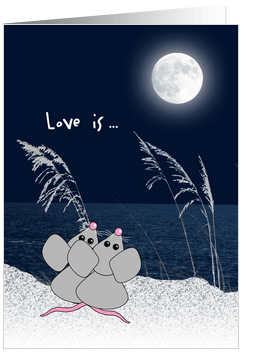
Here’s her winning entry (cute mice!). Pam has won a Lifetime Commercial Use license from Diana’s Creations, donated by Doreen Erhardt – congratulations! I’m sure your prize will prove very helpful in your card designing.
So did everyone enjoy the contest? I sure did. Seeing everyone’s entries was interesting and fun.
How about giving me some suggestions for other design based prizes you’d like to see if I decide to host another Design Contest? Or if you want to contribute a prize of some kind yourself, drop me a line.
In the meantime, let’s all congratulate Pam on her fantastic win, and her fantastic greeting card!
Share this:

Blog Carnival V: The Big C
 As many of you know, October is National Breast Cancer Awareness Month, so I’m hosting a special Blog Carnival: THE BIG C that will run from today, September 28, 2011 to October 12, 2011 (which also happens to be my partner Nene’s birthday).
To enter the contest, write a blog post, Squidoo lens (or any other on-line page) on the topic of CANCER – not just breast cancer, but any type of cancer (except the Zodiac, but that goes without saying). Could be a post about your personal experience, or you could choose to write about special gifts to give a cancer patient, tips on what to say to a cancer patient, summer camps for kids with cancer, cancer charities, books about cancer, history of cancer treatment, etc. Unfortunately, the list is endless.
And you don’t have to stick with somber subjects. Cancer patients appreciate humor. Just remember it can be a sensitive subject.
To quality, you MUST include links to 3 cards at GCU with an encouragement or “get well” for cancer patients theme + a text link to the category’s page at GCU.
Link the phase – Paper Greeting Cards for Cancer Patients – to http://www.greetingcarduniverse.com/Occasions-Get+Well+Feel+Better-For+Cancer+Patients. You can do this at the bottom of your post if you can’t or don’t want to integrate it into your text. Why? Because GCU is kind enough to provide me with prizes for you guys, and they’re working to increase their on-line visibility (which is good for everybody, as more visitors = more sales).
Don’t forget that you can earn 50 cents per card (up to $25 per order) commission on any greeting card sold through your post if you use the Sell This Card tool.
So you have until October 12 to submit an entry by leaving a comment on this post. On October 13th, I will create and post the master list of links to be shared among the participants, and I’ll announce the winner (by random drawing) of our special prize.
The prize? Winner’s choice: a $25 gift certificate to Amazon.com, $25 worth of free card credits at Greeting Card Universe, OR a $25 donation to Susan G. Komen for the Cure.
I expect to see some amazing submissions from our amazing artists. If you haven’t participated in a Blog Carnival before, now’s a good time to get your toes wet.
Ready… set… go!
PS – I will announce the winner of our first design contest later. Thanks to Doreen for providing the prize and the idea!
Share this:

Artist Interview: Ross Peterson

Today we’re interviewing Ross Peterson of Cards by Ross, who joined GCU in 2010. He won the Design of the Day award on September 22, 2011 for his very well done October Anniversary card.
_________________________
 Ross, what drew you to join GCU?
I did a few illustrations for a friend of mine who sold cards on the site, so I thought I’d give it a try for myself.
Tell us who you are, where you are, and what you do.
My name is Ross Peterson and I live in a southwest suburb of Chicago. I worked for nearly 29 years in the prepress printing industry until my job magically went overseas. Luckily I was laid off, because the commute would’ve killed me. I’m currently in the process of bleeding my savings dry. I really should start looking for another job soon.
What’s your favorite greeting card on GCU that you’ve created?
Probably the Christmas card with the elf being laid off. The elf actually kind of looks like me, but then it is autobiographical.

Where else can we find you?
I’m on Facebook, but I haven’t done anything card-related on there yet.
What would people be surprised to learn about you?
That I have a paralyzing fear of drowning and dancing…or more accurately, drowning while dancing.
How did you become an artist?
I’ve always enjoyed drawing since I was small. I had no interest in business or engineering when I entered college, so I studied graphic design and photography. In retrospect, I really should’ve given that decision a little more thought.
What or who inspires you?
My favorite cartoonist is Gahan Wilson, every since his National Lampoon days. And I’m a big fan of Arthur Rackham and Winsor McCay, both long gone.
What motivates you to design greeting cards?
An intense fear of being forgotten.
Where do you find ideas for your work?
Usually from a dark place. Then I try to lighten them up a tad. One of my Christmas cards was initially rejected for being too bloody. Even I found it kind of disturbing.
What’s the most indispensable item you use to create your art?
I go through a lot of tracing paper. Oh, and the occasional beer.
What tools do you use to create your work?
I do a rough sketch on tracing paper, then scan it and redraw and color it in CorelDraw (because I didn’t want to pay for Illustrator). I’m also starting to use some watercolors.
When and why did you start selling your designs as greeting cards?
I’ve been drawing my own Christmas cards since 1979. A lot of people have told me that I should try selling them. So I finally took their advice after 31 years. Baby steps.
What do you do to promote your greeting cards on GCU?
That’s a good question. Any suggestions will be appreciated, especially with Christmas coming up.
If you weren’t an artist, what would you be?
I’m gonna go out on a limb and say…financially secure.
_________________________
Thanks, Ross, for letting us get to know you a little better!
Share this:

Dash of Inspiration – September 26, 2011
A Dash of Inspiration, A Cup of Creativity by Doreen
Year of the Dragon

Well, if you’ve been keeping an eye on Corrie’s 4-6 Month Lead-In Holiday Card Calendar on the GCU Community Blog, then you know those of us who wish to sell cards for the upcoming Chinese New Year celebrations should be creating them now. 2012 is the year of the Dragon . . . now how fun is that? So, I’ve pulled some resources together to inspire you and hopefully found a little something for everyone!
To begin, I always like do a little research on the holiday or occasion before I begin a design; for example . . . What colors and symbols are traditional? How do they express their greetings and well wishes? Here are a couple of links to help you understand the Chinese New Year celebrations.
Chinese New Year Traditions and Symbols
Chinese New Year Celebrations Around the World
For those of you like me who can’t draw a dragon, here are some great Dragon goodies for your toolboxes:
Photoshop Users: Chinese Dragon Brushes by Hawksmont
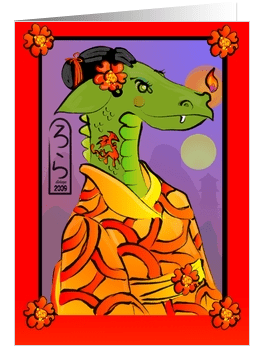
Image by Elledeegee, Blue Girl Graphics
GIMP Users: Dragon Brushes by Gimp Craft
Paint Shop Pro Users: Dragon Brushes by Glass Prism
For those talented artists who can create their own dragons, but have never tried it before . . . some Dragon Painting Tutorials!
How to Color a Dragon Tutorial in Photoshop
Drawing & Painting Tutorials for Chinese Dragons on YouTube
Go ahead, spread your dragon wings and create a Chinese New Year card for 2012!
Share this:

Critique Clinic – September 23-25, 2011

How does it work? For three days a week (Friday-Sunday midnight), I will open the clinic to any artist who wants an honest peer review and critique of a card which gets plenty of clicks but no sales, so something’s probably not quite right, or you’ve got a new design you want to test drive, or you’re unsure about the marketability of a card. Or perhaps you’re a newbie who isn’t sure if a recently submitted card is up to a marketable standard. Anyone is welcome to participate. In fact, I encourage everyone to at least look at the cards in question and read the critique comments – you may learn something. The purpose of the clinic is to help artists improve the commercial appeal and marketability of their cards.
THE RULES
- ONE card per artist only.
- Card must be for sale at Greeting Card Universe.
- We will take an unlimited number of artists, including those who have submitted recently, HOWEVER I reserve the right to close a clinic for the day if the submissions become overwhelming. If the clinic has been closed, and you submit a card, your comment will be deleted.
- To submit a card for critique, post a link to the card’s details page at GCU in the comments section of this clinic post.
- Any artist is free to comment and/or give a critique of a submitted card. HOWEVER, post-and-run comments like “great card” or “you suck” will not be tolerated, nor will abuse. Criticism should be constructive, not destructive. Play nice or you will be banned.
- I also won’t tolerate temper tantrums if you decide your “artistic integrity” is being stepped on because you asked for a critique, and someone told you the photo you’re using isn’t in focus. If you can’t take honest criticism, don’t submit. Once gets you a warning; twice and you’re banned from submitting in the future.
- Artists who critique may do so by giving their opinion, posting an example of another card, or pointing the submitter to a video, on-line article, or other helpful suggestion.
- Don’t forget that artists who are giving you tips and helpful advice are volunteering their time and trouble. Be nice. A link back to their store on your website or blog is appreciated (but not mandatory).
- You are free not to take any advice offered. There’s no guarantee any card will be a bestseller, so don’t come into the clinic with unrealistic expectations.
- Rules may change as we go along and we see how things turn out, okay?
So without any further ado, I declare this week’s Critique Clinic open!
Share this:

GCU Community Newsletter #17 – September 22, 2011

The days are getting cooler, the nights longer (thank goodness – being able to read a newspaper outside at 10 p.m. is always disconcerting). The sole surviving blackberry bush not only remained alive, it put out a bumper crop and my freezer is bursting. Time for blackberry cobbler, don’t you think?
We’ve got quite a round-up, so let’s get going!
Doreen Erhardt’s Dash of Inspiration – Cup of Creativity columns have brought us Tools and Resources for Grammar, and Better Designs for More Sales. We had Artist Interviews with Denise Beverly and Molly Harrison. In Nuts & Bolts, we showed you How to Improve Your Photo Cards with before and after pics, and how you can get picked to win the Design of the Day. Our Design Spotlight was on Rosie Scanlon.
In Rainbow Connection, we gave you a lovely Hanukkah palette of colors.
Finally, our Blog Carnival III: HIGH SPIRITED brought you some frighteningly good entries.
Until next time, don’t forget to pass the love around!

_________________________
 DESIGN CHALLENGE:
THE BEST of the BEST
When Doreen Erhardt of Salon of Art won 1st place in a recent design contest, she decided to contribute her prize to the GCU Community.
“The prize is a Lifetime Commercial Use License for all Diana’s Creations design elements,” Doreen says. “Diana has generously allowed me to donate it to one of our GCU Community Blog Contests. It’s value is $30.”
This Lifetime Commercial Use license is applicable to Diana’s Creations and Diana’s Creations Exclusive. That means, yes, you can use these design elements on your greeting cards. Yay!
So according to Doreen’s very helpful suggestion, here’s my Challenge to the Artists – if you want to win this fabulous prize, here’s what you need to do:
- Show us your best greeting card design. Ideally, a card that meets the design qualities mentioned by Doreen in her Dash of Inspiration – Cup of Creativity post on September 19, 2011. We want to see your best – not necessarily your best selling, but the design you think ticks all the right boxes.
- Tell us a little about why this design is your best. One or two sentences will do.
- Post your card’s link in the Comment Section of this newsletter post. The greeting card must be available for sale at Greeting Card Universe.
- One card ONLY per artist.
- All conditions must be met for your card to be eligible to win the prize.
The contest deadline is September 28, 2011. On September 29th, I’ll put up a master post with all the entries and announce the winner of the prize.
“I’d like to see what artists consider to be a 10 out of 10 in their store,” says Doreen.
I’m sure we’re all interested to see the results, too. So get cracking and post your link! You’ve got a week to show us what you’ve got.
_________________________
 The Critique Clinic is open every Friday, Saturday and Sunday to all GCU artists seeking peer review, advice and tips. Any artist may submit or leave a critique. All artists are encouraged to check the comment threads – you’ll learn something that may help you with your own marketability.
Cindy Johns at I Love Cuttables has a blog dedicated to daily posting the Design of the Day. Check it out – you may be featured!
There is a GCU artists’ group on Facebook. We encourage you to join, post cards for your fellow artists to admire, share news, and have fun!
Greeting Card Universe continues it’s marketing campaign. Here’s the latest from September 21, 2011.
There’s an on-going Facebook Round Robin happening on the GCU Forum. Check it out!
The Salon of Art Facebook fan page (by Doreen Erhardt) is a great place to go to find links to all kinds of helpful resources like tutorials, brushes, news about competitions and contests, marketing tips and a lot more. Check it out!
DID YOU KNOW you can “like” this newsletter or any post on the GCU Community blog, or include them in your social bookmarks? Or Google +1 them! Just click the title of the post, which takes you to the permanent link page. At the bottom of the page you’ll see buttons for social sites like Facebook, Reddit, Google +1, StumbleUpon, etc.
_________________________
Share this:

Blog Carnival III: HIGH SPIRITED

It’s been hauntingly good, sometimes bone-chilling fun, but our Blog Carnival III: HIGH SPIRITED has ended. Here are the results – please visit and leave comments on these spook-tacular entries!
The winner of our contest, and recipient of a prize valued at $25, is Betty Matsumoto-Schuch – congratulations, Betty!
Watch this space, peeps, because I’ll have a new contest coming at you real soon, with a super design prize donated by Doreen Erhardt and worth $30! No more hints , goblins and ghouls… you’ll just have to wait and see. 🙂
_________________________
Spirit Orbs with Whiskers
“As the days grow shorter and the nights cool…”
Bud & Tony, Betty Matsumoto-Schuch
Halloween Blog Carnival
“Halloween isn’t the pagan holiday that many think it is…”
I Love Cuttables, Cindy Johns
Ghost Time
“To be honest, I’m not into scary experiences…”
Aura2000, Aura 2000
We Only Thought We Wanted a Séance
“When my twin brother and I were younger, we did a lot of crazy things…”
DB Visual Arts, Denise Beverly
Ghosts and Goblins and Witches, Oh My!
“There’s a chilly wind blowing…”
Hand-Me-Downz, Richard Skelley
Haunted House Halloween Party Invitations
“Lost, we creep along a dark road toward a lighted porch…”
It’s a Beautiful World, Catherine Sherman
The Haunting of Parnell House
“I saw a dark red puddle at the foot of the stairs…”
Janet Lee Designs, Janet Palaggi
Monster in My Woods
“We heard the distinctive sound of a woman being mauled…”
Dragonfire Graphics, Betsy Bush
The Proposal
“The place is said to be haunted…”
Reel Cards, Robert Bulanadi
Share this:

Artist Interview: Molly Harrison

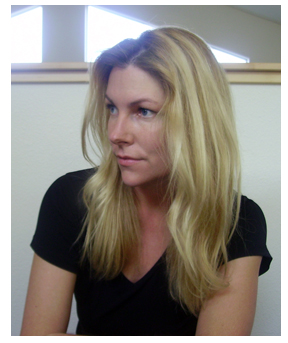
Today we’re interviewing new artist, Molly Harrison, who joined GCU in August, 2011. Welcome, Molly, and thank you for agreeing to tell us a little more about yourself!
_________________________
 Molly, what drew you to join Greeting Card Universe?
I was looking for places to sell my designs and discovered GCU.
Tell us who you are, where you are, and what you do.
I am a wife and mother of two (girl and boy) have 4 cats, one dog, live on a hillside in the country with a 180 degree view of a river canyon (northern California valley). I am a self employed artist working out of my home studio.
Where else can we find you?
My website: The Fantasy Art of Molly Harrison. I also have a Facebook fanpage plus eBay, Etsy, and Zazzle.
What would people be surprised to learn about you?
I was a singer in a band in my early 20s
How did you become an artist?
I have been doing it all my life. It is my true passion. I went through college aimlessly until I finally settled down in the illustration department. I graduated with a BA in Communication and Information Studies, Illustration Design.
What or who inspires you?
Nature, all things around me. Emotions. Children’s books. Animals. In the way of other art, any and all of it is inspiring to me. I draw ideas and emotions from the world around me and try to encapsulate it and form my own renderings for others to enjoy.
What motivates you to design greeting cards?
Greeting cards are simple ways to spread a kind word. When I’m designing (for instance) a card for a baby shower, I am brought back to the joyous time when I was pregnant and anticipating a new turn of life when my children were born. I think from my own experiences, I am motivated. Life is short and if we don’t celebrate the sweetest moments, we miss out. Cards allow us to celebrate. Knowing I can bring a smile to someone’s face when they see an illustration I have created it the ultimate reward.

Where do you find ideas for your work?
My ideas come from everywhere. It has never been hard for me to start a new work. Fantasy art is my main area of interest. I am not sure why I am so drawn to it, but it has been the case since I was little. Mystical and fantastical creatures and places are limitless.
What’s your workspace or studio like?
Usually it is a mess because I am overwhelmed with ideas that come all at once. It is also at times filled with cats! I am lucky to have a giant window to lookout at the canyon. It faces the west and during certain times of the year, mainly fall, the brilliant colors in the big sky stretch as far as you can see. I use my grandfather’s old, wooden art table. My grandpa was a watercolor artist. His artwork inspired me when I was small. I have many of his paintings of barns, birds, and boats up in my home.
What’s the most indispensable item you use to create your art?
It’s funny, but if I don’t have a kneaded eraser, I can’t draw because I can’t stand the little eraser bits that get all over when you use a typical eraser. I also have to have my good 300 lb paper for watercolor painting. A long time ago I decided it’s worth it to spend the extra bit to use quality paper. Good paper can make even a painting look ten times better.
What tools do you use to create your work?
Pencil (usually I sketch out using an F softness), archival ink for the lines, paint brushes (mainly small round because I do lot’s of detail), and artist quality paints. I also use Photoshop for coloring many of my illustrations for cards.
When and why did you start selling your designs as greeting cards?
I started selling in 2002 at a little children’s boutique in the small town where I grew up. They were hand drawn and painted.
What do you do to promote your greeting cards on GCU?
I promote on my website and also my Facebook pages.
If you weren’t an artist, what would you be?
This is tough…often I have wondered if I have chosen the right path. But then again it comes so strongly from the heart that I think no matter what I was doing, I would still end up going back to some kind of art. When I’m creating I feel truly at home. I have thought about going back to school to become something more stable, like a nurse or something, but then I think I wouldn’t have any time for art!
Share this:

Dash of Inspiration – Better Designs More Sales
A Dash of Inspiration, A Cup of Creativity by Doreen
Better Designs = More Approvals = More Sales
This past week I was doing some serious browsing through the huge collection of cards at GCU for both the purpose of making some favorites for personal purchases of my own coming up, and for new choices to promote on my many sites.
This browsing effort was a real eye-opener for me into what GCU is talking about with marketability. The hat I was wearing at the time was very much that of a consumer’s perspective and I was actually surprised by the HUGE amount of cards on the site that give an amateur impression because of the basic design principle flaws.
Don’t get me wrong, there are tons of fantastic cards, but I began to really understand where GCU is coming from when I saw hundreds of the following design mistakes on cards:
- Poor compositional layout of elements such as: a) Cards with un-even borders, b) Chaotic placement of elements, and c) Lack of balance.
- Excessive use of effects; including excessive beveling on elements, borders, photographs and text.
- Poor use of color such as; a) Bright colors surrounding an image where the background color does not coordinate/blend with the image or occasion, b) Color clashing when colors are used together do not present any visual appeal, and c) Chaotic color combinations which may be artistic, but have to direct correlation to the occasion or overall message on the card.
- Illegible text including; a) Excessive beveling, b) Shadow effects, c) Color and colored text on colored background, d) Angle and placement of text, and e) Font choice.
You may wonder why I consider this a topic for my Dash of Inspiration column – here’s why; I want to inspire you to learn how to avoid making these design mistakes and if any of your cards are sitting on the site as current victims of these tragic design errors, I want to inspire you to fix them.
I found some helpful and interesting links to guide you to a better understanding of basic design principles and though in some cases these articles may have been written for designing a website; good design, balance, legibility, color use and above all; Consumer Appeal and Marketability are the same, regardless of the product.
Elements and Principles of Design
Want to know how to design? Learn the Basics
The Modern, No-Nonsense Guide to the Principles of Design
Five Principles for Choosing and Using Typefaces
Bonus Tips:
When designing your greeting cards identify WHO THE AUDIENCE IS! When creating cards where the recipient is likely to be a senior citizen, cater the design to them. Same is true if your recipient is likely to be a child. Don’t just use the same design, typography and verse if the category you are designing for has a non-generic audience.
Share this:

Critique Clinic – September 16-18, 2011
How does it work? For three days a week (Friday-Sunday midnight), I will open the clinic to any artist who wants an honest peer review and critique of a card which gets plenty of clicks but no sales, so something’s probably not quite right, or you’ve got a new design you want to test drive, or you’re unsure about the marketability of a card. Or perhaps you’re a newbie who isn’t sure if a recently submitted card is up to a marketable standard. Anyone is welcome to participate. In fact, I encourage everyone to at least look at the cards in question and read the critique comments – you may learn something. The purpose of the clinic is to help artists improve the commercial appeal and marketability of their cards.
THE RULES
- ONE card per artist only.
- Card must be for sale at Greeting Card Universe.
- We will take an unlimited number of artists, including those who have submitted recently, HOWEVER I reserve the right to close a clinic for the day if the submissions become overwhelming. If the clinic has been closed, and you submit a card, your comment will be deleted.
- To submit a card for critique, post a link to the card’s details page at GCU in the comments section of this clinic post.
- Any artist is free to comment and/or give a critique of a submitted card. HOWEVER, post-and-run comments like “great card” or “you suck” will not be tolerated, nor will abuse. Criticism should be constructive, not destructive. Play nice or you will be banned.
- I also won’t tolerate temper tantrums if you decide your “artistic integrity” is being stepped on because you asked for a critique, and someone told you the photo you’re using isn’t in focus. If you can’t take honest criticism, don’t submit. Once gets you a warning; twice and you’re banned from submitting in the future.
- Artists who critique may do so by giving their opinion, posting an example of another card, or pointing the submitter to a video, on-line article, or other helpful suggestion.
- Don’t forget that artists who are giving you tips and helpful advice are volunteering their time and trouble. Be nice. A link back to their store on your website or blog is appreciated (but not mandatory).
- You are free not to take any advice offered. There’s no guarantee any card will be a bestseller, so don’t come into the clinic with unrealistic expectations.
- Rules may change as we go along and we see how things turn out, okay?
So without any further ado, I declare this week’s Critique Clinic open!


